Category Archives: Wellbeing

Coronavirus: Self-isolation week six
Six weeks into self-isolation and I’m now past the half way mark of how long I expect to be in quarantine for, as a precautionary measure during the coronavirus outbreak. Things are going as well as they can, given the circumstances.
Although, I’ve been a little disheartened hearing accounts of occasions that ‘lockdown’ restrictions have been broken. I even saw posts on social media of people sharing their get-togethers, surely all in attendance could never not be from the same household?
There were also plans being circulating to try to encourage people to meet up for a mass gathering. It’s sad to hear of people flouting social distancing guidelines; they’re in place to stop the spread of the virus. Now that we’re weeks in doesn’t mean we should treat ‘lockdown’ any differently than we did on day one.
I hope these cases are minimal. Now the UK has “past the peak” of the virus, according to the Government, that certainly would suggest so. However, getting the virus is still a possibility until a vaccine is found and developed. Many can recover from it, as did Prime Minister Boris Johnson, but the unpredictability of how it affects people is still there. These series of Tweets show the stark seriousness of the virus. My thoughts are with all those who’ve lost loved ones:
The spirit of the UK people remains strong, as demonstrated by the fundraising efforts of Captain Tom Moore for NHS Charities Together. He raised more than £30m by his 100th birthday this week by walking around laps of his garden. Also, every Thursday evening we continue to clap for our key workers. The applause on our street, and no doubt across the country, gets longer and louder each week.
I’m grateful to all my colleagues, fellow key workers, who are going into work each day to keep the radio station running and keeping listeners informed and entertained throughout the pandemic. I’m contributing from home and this week, my computer has been set up successfully. It means I can do everything I could in the newsroom from home, without having to have help from someone back at base to put cues or audio in programme running orders. My thanks to everyone who helped with that over the past few weeks.
The computer’s set up in a home office area, which helps massively when working from home to keep it separate from the living space. I now have an even better view of the back garden to provide fresh air and inspiration for the week ahead.


Coronavirus: Self-isolation week five
Reflecting on the past week, I remember a friend of mine who has died after becoming ill with coronvirus. Every day the death toll is rising and behind each number are family and friends who are grieving. All coronavirus related deaths would not have happened had this virus not existed and it’s heartbreaking to think how many people across the world have lost loved ones.
I have known Geoff most of my life; he was a fellow Manchester City fan who I knew from our supporters’ club and he went to games with my Dad. He was always kind to me and interested in my career. I shall remember him with affection. Only close family can attend his funeral, due to social distancing measures. It is with great sadness that I cannot pay my respects in this way.
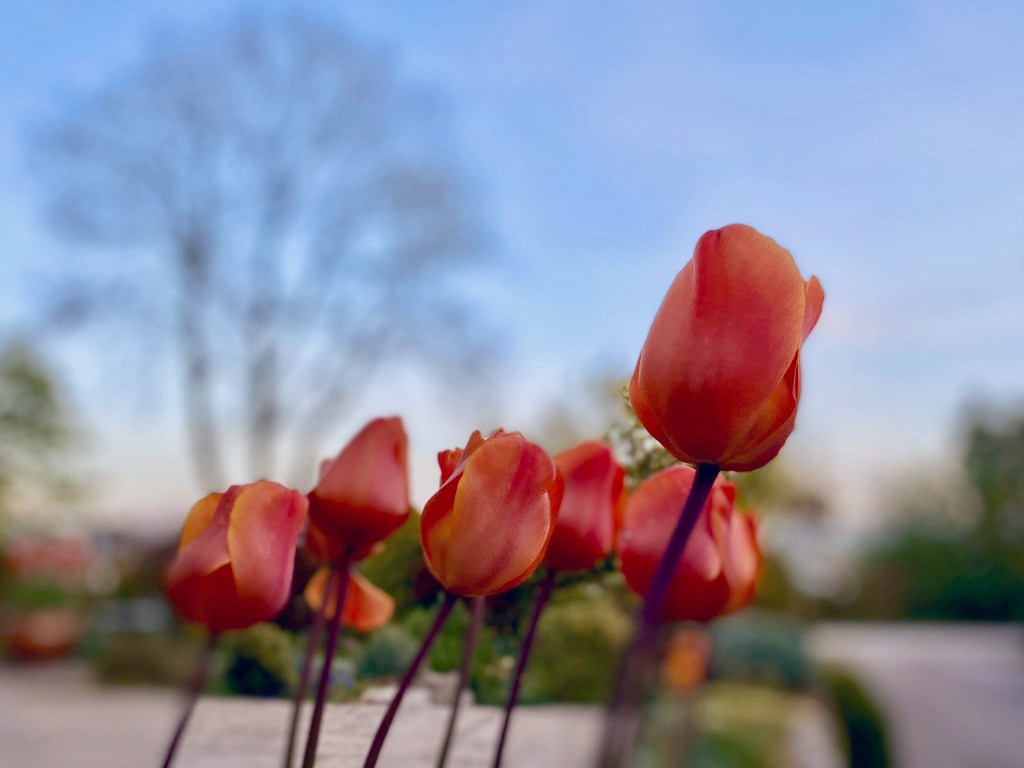
This past week has also been lamentable because I should have been on holiday in New York. It became all too easy to think of “what if” scenarios – what I might have been doing at certain times had the pandemic not swept across the world. I actually saw the hotel I was meant to be staying in on Times Square in a shot used on a BBC news report about how New York has been severely affected with cases of the virus.
The lights are out on Broadway, where I was due to see the production of Stephen Sondheim’s musical comedy Company, after missing its run in London’s West End last year. The ticket price has been refunded but I am still waiting to be reimbursed for the flights and hotel bookings, which could take anything up to 90 days.
Musicals are great escapism during these uncertain times and I’ve been able to get my fix with a subscription to Disney Plus, which isn’t just about animated classics. There’s the Star Wars back catalogue, Marvel universe and National Geographic documentaries included too. During my annual leave, I’ve watched another of Sondheim’s works Into the Woods as well as Mary Poppins Returns. Two very different films, both I’d recommend.
Friday night YouTube screenings of an Andrew Lloyd Webber musical have also been something to look forward to, while staying at home. This week’s was Love Never Dies, the sequel to Phantom of the Opera. As a fan of the original I didn’t know what to expect of a new iteration but I loved it and may even catch it again before the link on the ‘Show Must Go On’ page expires this weekend.
Having more time on my hands, while in self-isolation, has also given a chance to bake more often than usual. (With usual meaning not at all.) I was previously quite daunted by it, after seeing elaborate showstoppers on the Great British Bake Off and other cookery programmes, I’d find any excuse to buy ready made baked goods from a shop. However, I’m amazed how simple some recipes are.
It’s easy to see why there’s a shortage of flour because it seems every man, woman and dog have been having a bash at baking banana bread. I’ve perfected my own version (pictured below) which has oats in and caramelised banana on top. Other tasty recipes that have gone down well include a tea loaf that’s made with marmalade and homemade ginger biscuits.
I’m back working from home this coming week, all that’s left to do now is finish wiring up the work computer and, all being well, I’ll be able to log in and access the internal BBC network. That should help workflow massively. I’ll let you know how it goes in next week’s update. Stay safe.


Coronavirus: Week four in self-isolation
The Easter bank holiday gave chance for a short break. My partner and I made the decision to do everything as close as possible to what we usually would. A nice meal, with a leg of lamb, flowers and an egg hunt around the garden. The biggest absence were the wider family but video calls meant that everyone could feel connected virtually.
Our family became a bit bigger on Easter Monday, as we welcomed new member George Patrick into the world. A symbol of hope in uncertain times, an appropriate Easter metaphor too.
The joyous occasion is also a reminder that, alongside helping coronvirus patients at increased capacity, NHS staff are still dealing with all the usual hospital admissions and doing so to an incredibly high standard. The service which Britain is so proud of.
We can’t visit baby George, he’s home and well, but has to isolate with his parents for 12 weeks. I’m further along the self-isolation timeline at four weeks plus. It’s going as well as it can do. The main side effect for me has been swollen feet. I’m not the most avid of walkers at the best of times but even walking around work and Carlisle city centre offers more daily exercise than working from home in a bungalow does.
As I’ve taken the decision not to leave the house at all during lockdown, I can’t make use of the Government mandated daily walk but have been trying to exercise at home. One thing I will never take for granted is how lucky I am to live so close to Morecambe Bay. There’s so many places I could aspire to visit once the peak of the virus has passed. What I would really like is to walk along the coast and soak up the views of the a Lake District fells in the distance once again. That’s first on a long list of things to do. Visiting the local takeaway for a kebab comes a close second though, I must admit.
A computer from work has now been delivered so, when that’s set up, I’ll be able to access the internal BBC systems a lot easier than I do currently, while working from home. A big thanks to my colleagues back at base who have input audio and scripts into the play out system and enabled me to help produce the breakfast show. When I’m up and running on the new kit I’ll be able to do everything I can usually do in the office.
However, I’ll be spending my fifth week of self-isolation on annual leave. It’s been booked for a long time because I was meant to be flying to New York. Once it became apparent that my holiday of a lifetime wouldn’t be taking place yet, I decided to keep the annual leave because it’ll be good to have time off and mental break, if nothing else.
My week “off” will mostly be spent in the back garden, where the weather forecast looks good. It offers time for quiet contemplation, to make sense of this strange period of time we’re living through. Those personal admin type tasks, that always seem to get put off. And to jump on the baking bandwagon, after managing to somehow get hold of some flour. I’ll share how successful my attempts are with you next week. Until then, take care.


Coronavirus: Week three in self-isolation
I can’t help but feel reflective while in “lockdown”. Last Good Friday, I was buzzing after presenting a music special on the radio called Eclectic 80s. This year I haven’t left the house for three weeks. It puts everything into perspective about how different life can be from one period of time to the next.
My fiancé was due to present a radio programme this Good Friday. He’s usually always on-air on Bank Holidays, that’s how we met when I studio produced one of his shows almost four years ago. The programme was postponed this year, due to alternative arrangements made because of the coronavirus pandemic. I know first-hand how much time and effort goes into planning these programmes, so hopefully it’ll make it to air after the outbreak is over.
For the past few years, Easter has always been very special. Not just for religious reasons but also because it allows for precious family time. As I spend Christmas Day with my parents at Easter I spend it with my partner and his children. It’s always an enjoyable time. Due to social distancing the family can’t be together this year, so it’ll feel strange. We’ll have a video call meet up instead and have plans to celebrate together as soon as possible, once the peak of the virus has passed and it’s safe to do so.
Lockdown during the pandemic is difficult for everyone; it’s something many of us have never experienced the likes of before. I’m trying to keep positive about my own situation in self-isolation but one of the reasons why it is hard is because, for the first time in my life, ‘underlying health conditions’ have literally stopped me in my tracks.
I’ve spent years making sure my quality of life can be on a par with anyone else’s and I’m fortunate that, usually, that is the case. However, at the moment, I can’t do what I want which is to go out and about and be part of a bustling radio newsroom. I can actually do quite a lot for the station from home though and soon a computer from work will be delivered, so I can access the internal network and that’ll aid my workflow even more.
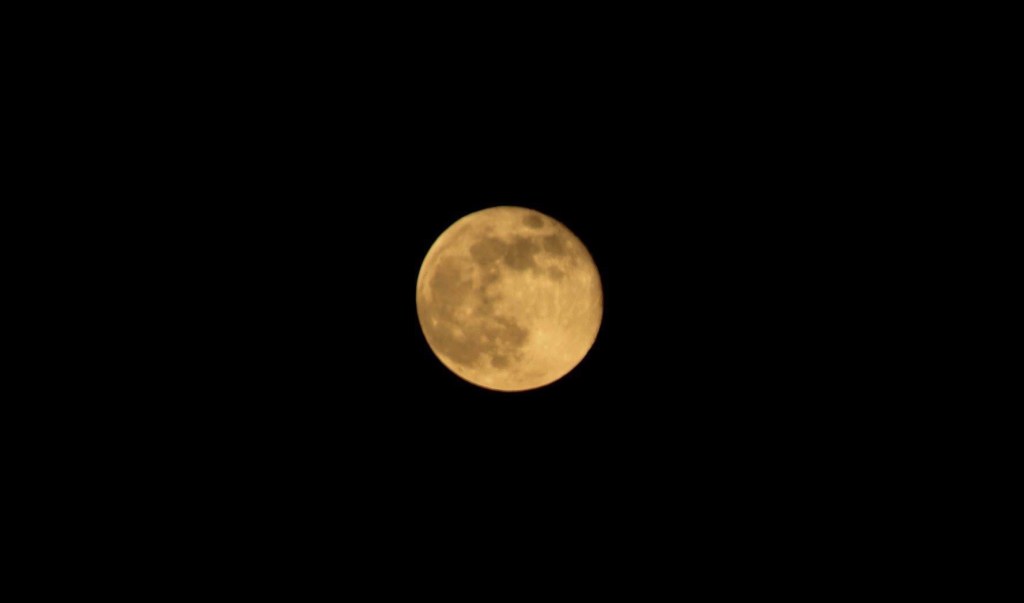
I’ve got four days off over the Easter period and, while this would usually be a very busy time, I’m using the time it to relax and recharge. It’s been great to dig out my DSLR camera again to reacquaint myself with my hobby of photography. One of my garden wildlife pictures was used on a social media video for BBC Radio Cumbria this week and I was able to get a great shot, using an extended zoom lens, of the supermoon.
I wish you a peaceful Easter at home. This year’s will be a memorable occasion but probably not for reasons anyone could have anticipated. However, the religious comparisons are quite pertinent during this “lockdown”. These unusual times will pass and we will get our lives back again. A new beginning will come.

Coronavirus: Week two in self-isolation
If you would have told me by April I wouldn’t have left the house for a fortnight then, I’d have thought it was an April Fools joke! However, we’ve living through unusual times and we must all do our bit to stop the spread of coronavirus.
At the time of writing, I’m on my 18th day in quarantine and I’m taking it well. For a lot of people who have ‘underlying health conditions’, like myself, we’ve already been through quite a lot in our lives and I think that helps build up a resilience which helps deal with challenging circumstances.
My accounts of life in self-isolation were featured on the hospital radio station Bay Trust Radio last Saturday. I was flattered to be asked because I wasn’t sure the experiences I’ve been tweeting and blogging about have been very interesting! I have been wondering how long I may be able to keep up my daily Twitter diary, because the days are becoming quite similar and blending together, but I’ll try to keep it up as long as possible.
This time last year, I was a guest at a beautiful spring wedding in Cheshire. It seems like that was in a parallel universe to now, with gatherings banned. We all must not lose sight of why we are doing these social distancing measures though. The unpredictability of the virus means that none of us know how it would affect us, if we contract it.
My social media timelines are full of harrowing accounts of people who have lost loved ones to this virus, which really hits home the reasoning why we need to stay at home to stop the spread. I had a bad bout of asthma earlier this week, which can usually be rectified with an inhaler. I couldn’t help but think how frightening it must be for people who struggle for breath, if they have severe symptoms to coronavirus.
I’ve been working from home again this week, helping to produce the breakfast programme on BBC Radio Cumbria. It helps during self-isolation to provide structure and a purpose to my days. I’ve also been back broadcasting this week too; I sent over a report about birdwatching from the back garden, in honour of the RSPB’s ‘Big Garden Birdwatch’.
I live within the Arnside and Silverdale Area of Outstanding Natural Beauty and the location certainly lives up to that name. There’s a plethora of birdlife to gaze at from nuthatches to chaffinches and lesser spotted woodpeckers. Roe deer from woods behind also make an appearance some evenings too. They’re so graceful to see that I can forgive them for munching on the plants.
My Mum and Dad are set up on their iPad now and have picked up using the technology very quickly and video calling them is a joy. Despite being adamantly against it, that shows what kind happen if you’re mind is put onto something. Speaking of which, I’ve dusted off the exercise bike to try to burn off some calories from the chocolate I’ve been eating. Apologies in advance but, in a weak moment, I have to admit that our Easter egg stash has been broken into.
The peak of the pandemic has not yet passed yet in this country, so this way of life is likely to continue for some time. I was speaking to a radio contributor earlier this week who said she doesn’t feel like she is helping the situation because it feels like she’s doing nothing. Staying at home is helping though and the more of us do this, only going out when absolutely necessary, the sooner this will pass.


Coronavirus: My first week in self-isolation
“Stay at home. Protect the NHS. Save lives.”
I’ve been self-isolating for more than a week due to government advice during the coronavirus pandemic and so far, so good. I have two ‘underlying health conditions’ and, while not in the more severe group that need to be “shielded” from the virus, the advice for me was to social distance, as much as possible. I don’t have any symptoms and feel healthy, it’s just a precaution.
The fantastic team at BBC Radio Cumbria have enabled me to work from home so I took the decision to self-isolate, as I didn’t want to take any chances. I haven’t been out of the house since last Wednesday, 18 March. As with ‘flu, if I catch coronavirus, the risk is I’d need to be hospitalised. At a time when the NHS is pressured, I think self-isolating is the responsible thing to do. Not just for myself but to stop the spread and help others.
Working from home has been brilliant; it gives me something to focus on. I’m listed as a ‘key worker’ in the category of public service broadcasters and journalists and I’m glad to be able to play a part in supporting the BBC’s news output. I have an office space to work in and find it helps to mentally separate work from home life… although I’m sure my cat would prefer it if she could sit on my lap constantly!
With a team back at base supporting me to input cues into the internal BBC system, I’ve helped produce the breakfast programme, can record audio / broadcast using my phone and am in touch with colleagues regularly, so I don’t feel out of the loop. I miss reading news bulletins and studio producing programmes but those roles need to be done on site. I’m looking forward to getting back to that, as soon as possible.
My partner’s isolating with me, so we’ve not been able to physically shop for food for a while. I take it as a good sign that home delivery slots from the supermarkets are full for weeks in advance because it means other people are heeding the advice to stay at home. We’ve been able to get items from a local newsagent, which leaves the deliveries on doorsteps and neighbours have offered to help too.
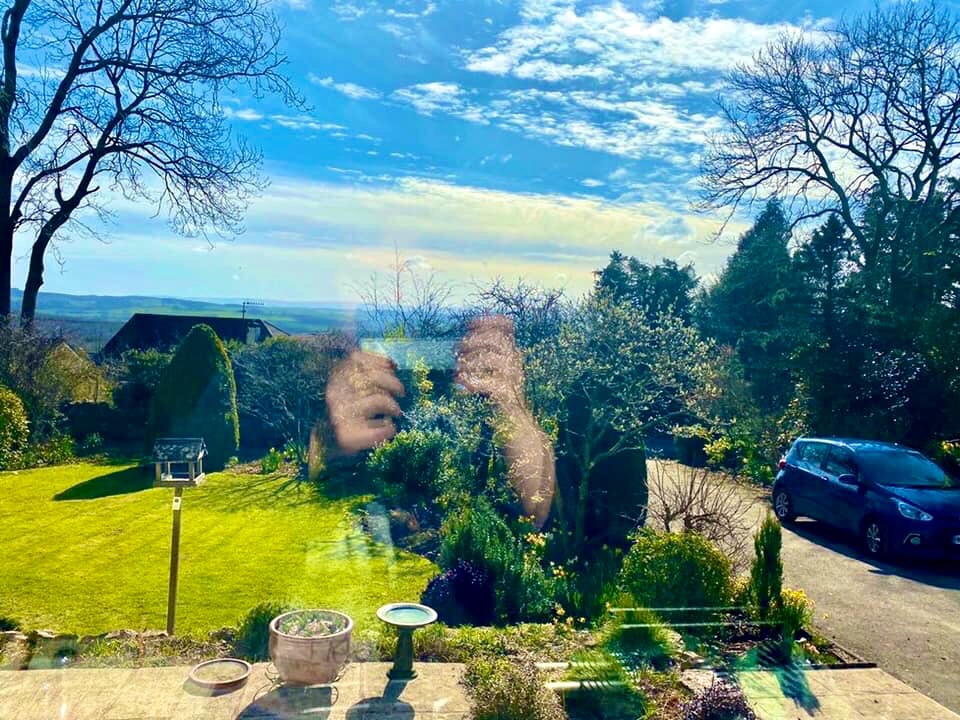
It’s important to look after mental health at times like this and I’m in good spirits. I’m fortunate to have lovely views of south Cumbria to look at and a big garden that I try to get out in as much as possible for some fresh air. It’s where I’m writing this now. I don’t feel the need to get out and about to exercise. We have equipment we can use here anyway, I just need to motive myself to do it!
I find it difficult to read novels lately; I’m too interested in the latest news developments, but have found audio books a useful distraction to everything that’s happening in the outside world. Radio has been a great companion, as always. I have BBC Radio Cumbria on constantly while working from home and it helps to feel connected to those back at base. The importance of public service broadcasting shouldn’t be under-estimated.
Mothering Sunday was heartbreaking because I had made plans to see my Mum and Dad, all of which were put on hold. They don’t yet have video calling capabilities, but I’ve bought them an iPad so that’ll soon change. We’re in touch over the phone all the time and I was lucky to have been able to see them recently.
In terms of the future, who knows how long this will last? I was due to travel to New York after Easter which now won’t be happening. Although, the flights are still showing as going ahead. Even if the US travel ban is lifted, I wouldn’t want to go there so soon and Broadway is still on lockdown. Hopefully we can get some money back because, if we can’t get a refund, we stand to lose thousands of pounds.
Only a few weeks ago, my partner and I were in a chippy when a group of American tourists came in. It made us think ahead with excitement to our holiday in the USA. A week later we were in same chippy, the Americans had gone and it then seemed highly unlikely that we’d be going abroad at all. Fast forward another week later and we weren’t even leaving the house.
The speed the virus is spreading is shocking but we’re all in this together. The more of us who follow the advice to stay at home, and only go out when absolutely necessary, the sooner it’ll be over.
Stay strong, stay safe and take care. X

Disability in the media
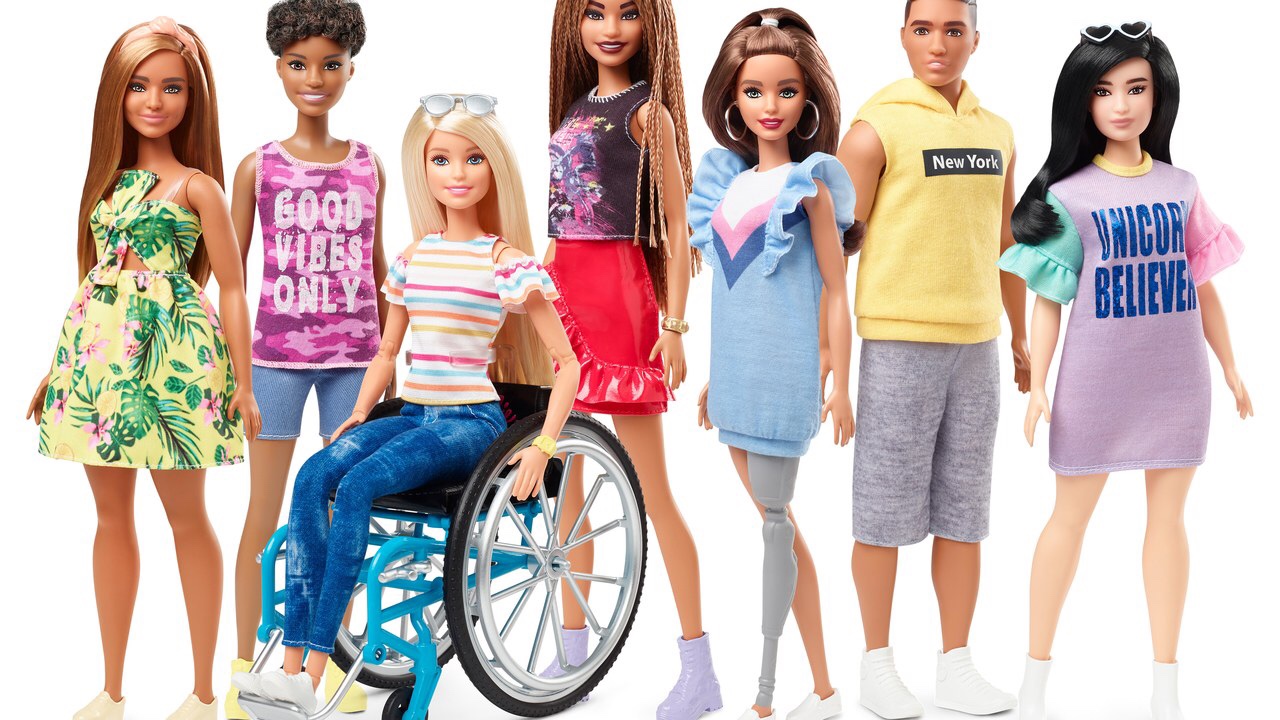
An inclusive range of Barbie dolls, that have disabilities, has been announced by toy makers Mattel. This isn’t like the previous incarnation of “Share a Smile Becky”, which showed a pink wheelchair that didn’t fit into ‘Barbie’s dream house’. Soon Barbie will look more authentic. One of the dolls uses a wheelchair and another has a prosthetic leg. This range will be available in Autumn later this year.
There’s now more representations of disabilities in the mainstream media, which means we’re getting closer to reflecting society but there’s still more to do.
11 million people in the UK are living with a disability, statistics from Disability Sport show. Diversity is a wonderful thing that we must celebrate, rather than shy away from, and the media has an important role to play in holding a mirror up to society.
This is by no means an simple task, but who said positive change was easy? There’s different models used to depict disability and it’s vital that the media takes a stance that will have a positive impact.
The medical model.
As the name suggests, the name derives from health care. When a person is born with an impairment or acquires one, in the medical model, this is often seen as something to be cured through surgery or otherwise. Here we can see negative connotations used with descriptive language, such as someone “suffers” from a condition rather than lives with it or worse is “handicapped”. This places the disability as a fault with the person concerned, which can lead to prejudice and negative stereotypes to the public subliminally.
The social model.
This is a more liberating view which focuses on the environment we live in. What differs in the viewpoints is that, in the social model, it’s our surroundings that are disabling not the person. Think of a building, the room you need to get to is on the first floor. A non-disabled person may choose to use the stairs and a wheelchair user would take the lift. They’ve both able to access where they need to go, so nothing has become disabling in that situation. If a lift wasn’t available that’s when a person would be disabled because they can’t get to where they need to go. Up until that point, both people were being treated exactly the same.
I personally think if more people and organisations used the social model the world would be a more accessible, inclusive and accepting place.
We’re getting there, albeit slowly. Some of the most encouraging representations I see are like the the new range of Barbie dolls or inclusivity in children’s TV programmes because that’s giving young people a true representation before society has a chance to condition kids’ views as they grow up. Young people are often very accepting and non-judgemental, we can learn a lot from them. No one is born with prejudice, leading to the school of thought it’s something learnt through life.
The London Paralympics in 2012 gave hope that coverage could change some negative perceptions. Channel 4 was the broadcaster for this and, while I’m sure there were the very best of intentions, I felt the marketing missed the mark: Athletes were billed as ‘Super Human’. This was almost a hypercorrection for all the ills of the past. A Guardian article by Penny Pepper in 2016 commented how disabled people don’t want to be treated like superheroes, just as equal humans.
 The media is a powerful tool. Look at the sea-change and conversations that are happening about views towards plastic waste since David Attenborough’s Planet Earth II. It can happen again for perceptions about disability and here’s my thoughts about how…
Actions for change.
- If we’re rightfully celebrating diversity then let’s do it properly. Don’t show one group or the other – show integration.
- Greater representation of disabled people on-air. Young disabled people deserve to see people who are like them on TV, in print or hear on radio. Only 8% of people with disabilities in this country are wheelchair users, even some people who have mobility impairments don’t use one. Representation needs to encompass this range.
- If a disabled person is cast in a drama, have them take part in storylines that don’t constantly revolve around their impairment.
- Cut out ‘inspiration porn’. It’s not inspirational for someone with a disability to have an education, a job or be in a relationship… that’s normal. By all means, celebrate achievements but not the ordinary.
- Have sporting events such as the Olympics and Paralympics run together concurrently. This happened at the Gold Coast Commonwealth Games last year.
- There’s a lot more to disabled people than just sport, representations should focus on all walks of life.
- Use positive language.
- Talk, talk and talk more; this is the only way to tackle the taboo. Most misconceptions come from a lack of understanding or fear of the unknown.
Conclusion.
You may not agree with some or all of what I say here but at least a discussion is being had, rather than the elephant in the room. A video was produced by journalist Ellis Palmer for BBC Ideas recently “How to talk about disability”. If you’ve found the themes I’ve written about interesting I urge you to take a look at the short film and continue the conversation:
As Ellis says in that film: “treat others as you wish to be treated”. An impairment doesn’t define a person, it shapes experiences through life. Let’s make a difference and use the social model of disability everywhere, particularly in the media.
2012 – A look back on my year…
As we begin a new year I’m looking back on what made 2012 so memorable for me. There have been far too many things to list in one post, so I’m going to do a Top of the Pops style look back on my top three milestones of last year. (If you want to read my blog’s annual report then Click Here.)
3) Chilled Pure on Pure 107.8 FM
 I was listening on the day that Pure 107.8 FM was launched across Stockport in 2005 but would have never imagined (bad choice of word!?) that my voice would be on its airwaves. Now I have my own slot on the radio station that broadcasts to my home town and it’s a dream come true for me. I’ve been involved with the station in many different ways over the past three years – from wearing the panda suit to the end of year parties – it’s been great!
To be given the chance to present the Chilled Pure slot on the station was a great honour for me, not only because I appear on the schedule alongside seasoned broadcasters, but also because I get to play the easy-listening music that I’m passionate about.
I loved broadcasting on Christmas Eve into Christmas day; it was the icing on the cake for me to be on “Santa Watch” across the Stockport sky last year. I look forward to presenting more Chilled Pure weeknights from midnight in 2013!
2) Making Mental Health Positive
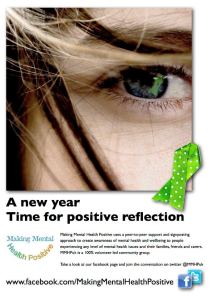 It might seem obvious but one of the best things about community radio is that it puts you in touch with some of the wonderful things that happen in your local area. Through my Chill Room show on North Manchester FM a listener, Dawn Perry, got in touch to tell me about her Making Mental Health Positive campaign and during 2012 I’ve enjoyed getting involved with this.
I’m the campaign’s media co-ordinator and part of the admin team that moderate the Facebook page, which acts as an online peer-to-peer support network. To see content featured on my radio shows have an impact in the community as well as a positive affect on people’s lives is wonderful. The campaign’s monthly meet and create events have been a success at The Lowry last year and these are continuing in 2013. With the campaign’s member count growing every day we go into the New Year outreaching to more people than ever.
1) Broadcast Journalism at the University of Central Lancashire (UCLan)
The turning point in my year came in September when I enrolled onto the Broadcast Journalism masters course at UCLan. Journalism had been a career path I’d considered for a long time but taking the plunge and starting the course was the best decision I made in 2012.
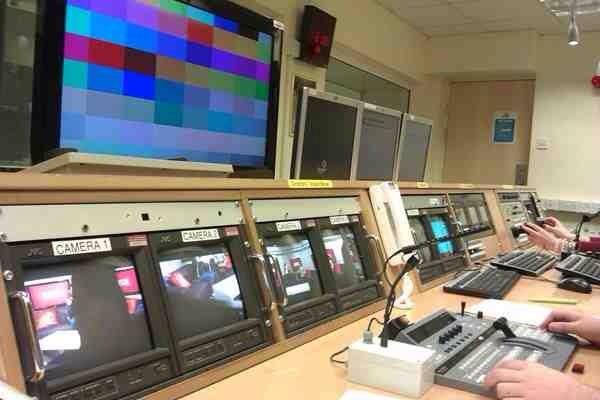 My family’s roots are in Lancashire so I’ve enjoyed exploring Red Rose County and getting to know the people in the area, especially in a year as special as the Preston Guild. Being a broadcast journalist means that I’ve had the opportunity to meet people and try out things that I would’ve never had chance to otherwise. I love the spontaneity of it; no two days are ever the same. I’ve met the man who designed a Preston CityScape out of MDF wood, sparred in a Blackpool Boxing Gym as well as eaten a battered mince pie…. and that’s just some of the places where my reports took me last year!
When I write my review of what a year 2013 has been, I will have graduated. It’ll be interesting to see what I’ll be doing then and look back at how I got there. I’m dedicated to my career and determined to achieve my dream of becoming a broadcast journalist. I know this year’s going to be hard work but it will also be exciting. I hope you’ll stay with me and follow my blog throughout 2013.
To be continued…
Making Mental Health Positive
 I find one of the things I enjoy most about radio is the opportunities it gives me to meet many interesting and inspirational people. Dawn Perry would be included way up at the top of this list; we first got in touch after she listened to my shows on North Manchester FM and contacted me about promoting her Facebook page: Making Mental Health Positive.
The campaign is about eliminating discrimination and the societal stigma that surrounds mental health issues, providing a platform to encourage self-help through positive peer-to-peer discussion. It has been uplifting to see the page progress from its formation into a thriving social media community, with well over 1,700 members based all over the world and growing. Health and wellbeing issues have a strong community connection because it is something that is universal and could potentially affect anyone.
My background working in the area of mental health spans back quite a few years to when I worked for the charity Anxiety UK as their media liaison officer. I started at around about the same time that I became involved in student radio. The combination of the two sparked my interest in music therapy, especially to aid relaxation. Over the years ‘Chillout’ is a musical genre that I have become synonymous with, rolling out the format I developed to radio stations across Greater Manchester.
Working for Anxiety UK taught me about meditation, mindfulness and self-hypnosis techniques that I have since incorporated into my lifestyle. My work here let me explore these interests deeper as well as helping others and promoting the many case studies of recovery that were used in the media. Years later, when Dawn approached me with her Making Mental Health Positive campaign we already had common ground as Dawn had been a member of Anxiety UK on their mentor programme.
It’s been a privilege to be involved with the campaign; to watch it progress and see the positive affect that it has on members. I’m glad that I can use my broadcasting experience to give the campaign a voice and spread the word about the good it does for the local community and beyond. Now not only a virtual social media page, the campaign has a strong presence within the North-West, partnered with The Lowry in Salford Quays. Meet and create groups are being set up, using the arts as a stimulus to bring people together and creatively helping end mental health discrimination. The first meeting will be delivered by Stich Art textile artist Joanne Walker on Sunday the 22nd of July. The August workshop will focus on photography and September’s will use the art of drama.
To hear my report from a recent campaign strategy meeting CLICK HERE.

The team hard at work(!) in last month’s strategy meeting.
 Katy Booth