Category Archives: Radio
I Started a Joke
One of my earliest memories of radio is listening to presenters playing pranks. Many a time I’ve been enthralled listening to one of Steve Penk’s wind-ups or Tiny Tim’s latest adventure on Justin Moorhouse’s show. I’ve always been a practical joker, so when I was let lose to broadcast on radio myself I knew that it was going to lead to pranks before too long.
I started on Fuse FM, presenting and producing my chillout show but, as you can imagine, it is not the most conductive environment to play a prank! All this changed when I took up my committee position and helped run the station. The broadcasting code stipulates that student radio stations must not play prank calls on the public… but we could get away with pranking other committee members (with their consent to broadcast it afterwards, of course.) I never received one of these calls unfortunately though. This was probably because I presented a Sunday morning show and, quite literally, no one could get up early enough to catch me!
The Radio Super Show was well known for the practical jokes they’d play around the station; it was a popular feature and compelling to listen to. Each week they’d target a show and try to persuade the presenter play a video that, unbeknownst to them, had a secret message hidden in it from the fader we hooked up to the computer for YouTube audio. This served as a great lesson actually, because presenters would learn the hard way that you must always PFL (pre-fade listen) unknown content before broadcasting it on-air… I fell for this myself when I took my eye off the ball while co-hosting a topical debate show and ended up playing the Mr Blobby song to the students of Manchester – who loved it!
Probably the most important rule for a prankster is to NEVER prank a station technician. Instead, it’s a much better strategy to have them on your side. This was essential for one of the bigger pranks that the Fuse committee played. The studios had just been fitted with a talk-back system, which meant that producers or newsreaders could sit in separate studios but still communicate with each other through their headphones. This was being trialled at the time, so we hadn’t told presenters about the new development. We couldn’t turn such a golden opportunity for mischief down. The webcams in the studios caught it all, I’m sure Orson Welles would have been proud of us. Here’s what happened next…
I haven’t played a prank since I graduated from student radio, I like to think it’s because I’ve matured like a fine wine now. The pranks that get played on me are also not as frequent but I still like to keep alert, just in case. Sometimes I do get caught out and it’s best that I don’t lead any type of Guess the Year features on Pure 107.8 FM any more because the team always find some way of getting the answer out of me! While over at North Manchester FM I can never be too sure if it’s a listener who has rang in or if it’s one of the other presenters disguising their voice outside in the office! They like to keep me on my toes. Maybe I’ll get them back one day, for old time’s sake…
Whether I started the joke or the joke is on me, it doesn’t really matter as long as everyone involved can see the funny side and laugh about it. I always say; if you can’t take it yourself then don’t dish it out, so I don’t mind (and secretly quite enjoy it) when I have a practical joke played on me. No one can see me blushing on radio anyway.
Making Mental Health Positive
 I find one of the things I enjoy most about radio is the opportunities it gives me to meet many interesting and inspirational people. Dawn Perry would be included way up at the top of this list; we first got in touch after she listened to my shows on North Manchester FM and contacted me about promoting her Facebook page: Making Mental Health Positive.
The campaign is about eliminating discrimination and the societal stigma that surrounds mental health issues, providing a platform to encourage self-help through positive peer-to-peer discussion. It has been uplifting to see the page progress from its formation into a thriving social media community, with well over 1,700 members based all over the world and growing. Health and wellbeing issues have a strong community connection because it is something that is universal and could potentially affect anyone.
My background working in the area of mental health spans back quite a few years to when I worked for the charity Anxiety UK as their media liaison officer. I started at around about the same time that I became involved in student radio. The combination of the two sparked my interest in music therapy, especially to aid relaxation. Over the years ‘Chillout’ is a musical genre that I have become synonymous with, rolling out the format I developed to radio stations across Greater Manchester.
Working for Anxiety UK taught me about meditation, mindfulness and self-hypnosis techniques that I have since incorporated into my lifestyle. My work here let me explore these interests deeper as well as helping others and promoting the many case studies of recovery that were used in the media. Years later, when Dawn approached me with her Making Mental Health Positive campaign we already had common ground as Dawn had been a member of Anxiety UK on their mentor programme.
It’s been a privilege to be involved with the campaign; to watch it progress and see the positive affect that it has on members. I’m glad that I can use my broadcasting experience to give the campaign a voice and spread the word about the good it does for the local community and beyond. Now not only a virtual social media page, the campaign has a strong presence within the North-West, partnered with The Lowry in Salford Quays. Meet and create groups are being set up, using the arts as a stimulus to bring people together and creatively helping end mental health discrimination. The first meeting will be delivered by Stich Art textile artist Joanne Walker on Sunday the 22nd of July. The August workshop will focus on photography and September’s will use the art of drama.
To hear my report from a recent campaign strategy meeting CLICK HERE.

The team hard at work(!) in last month’s strategy meeting.

Pure visit Stockport’s Teenage Market
What first comes to mind when you think about the town of Stockport? Maybe it’s the successful Metro swimming team, containing many hopefuls for the 2012 London Olympics. Perhaps it’s the nostalgia of Tudor house Bramhall Hall or the fabulous art deco restored Plaza theatre.
Don’t worry if none of those things instantly spring to mind; over the years Stockport has built up a reputation of being the forgotten sibling of the bright lights and bigger city of Manchester. However, as a proud Stopfordian, I’m here to tell you that it doesn’t have to be that way! (FACTOID: Natives are known as Stopfordians because ‘Stopford’ is the name the town derived from. You never know, that might be a question in a pub quiz sometime.)
 Pure 107.8 FM is the radio station serving the borough, which I have been involved with in lots of different ways over the past two years. I’m part of the team who put together The Basement, a community show which focuses on issues that affect young people across the town. You can imagine when we heard about a new initiative called the Teenage Market this was something that we wanted to feature on the show. By being there on the day, this also offered us a great opportunity to promote the show to our target audience as well as the potential to sign up new victims… sorry – presenters!
As I headed towards the market place on Sunday April 1st, just walking down the streets was like stepping back in time. The town centre is steeped in history – quite literally actually, with Stockport being infamously built on a hill! Mixing old nostalgia with new ideas, this was a perfect backdrop for the inaugural Teenage Market. I collected vox pops for the show and got talking to many of the stallholders; from vintage clothes to film making equipment and lifeguard training, there was something on offer for everyone. It was inspiring to hear from young people who not only have good business ideas but who also have the entrepreneurial skills to get the ball rolling and put their business plans into action. There’s plenty of things in Stockport to be proud of and The Teenage Market was a great showcase for many of them – the rising stars of the future!

(C) Mark Pattison
Hear how we got on at The Teenage Market this Wednesday from 7.30pm on Pure 107.8FM. The Basement is Pure’s youth show, made for young people by young people in Stockport. If you’d like to get involved email basement@pureradio.org.uk
For more information, visit the Facebook page: www.facebook.com/purebasement
Review: ‘John Peel’s Shed’ by John Osborne

You’d be forgiven for thinking that there had been a revival of classic kitchen-sink drama ‘Look Back in Anger’ when you see John Osborne’s name appearing in ‘What’s On’ guides at theatre near you. However, the talk I went to last night at a snow covered Lowry in Salford couldn’t have been more different. His namesake has an awesome vinyl record collection and speaks passionately about a subject close to my heart – radio! All presented enthusiastically in an enjoyable one-hour monologue called “John Peel’s Shed.”
The book Radio Head is what the show is based on. This was the first book that I read about radio back when I was starting out. In the summer of 2009, I had already been bitten by the radio bug and had just been promoted to Head of Marketing at my student radio station Fuse FM. With such a rich landscape and history to this medium I was eager to learn all about it. I headed off to Borders book store (remember those?) in Stockport’s appropriately named ‘Peel Centre’ to find out more. Among an array of television literature in the media section there was just one radio book available for me to devour: Radio Head. I must have been fate. I bought it, trying to convince myself that they were going to help with my dissertation research at university, which it did actually, so that was an added bonus!
The tagline is “Up and down the dial of British Radio”. It’s such a brilliant concept for a book; each day John listened to a radio station for the entire day and notes down his findings. As radio is such a fast moving medium this is now slightly dated but the stories are timeless. All types of stations are given the radio head treatment, from Virgin Radio (now Absolute) and Classic FM to the acclaimed community arts station Resonance FM. The foundations of radio are built on stories and each chapter is a fascinating culmination of the stories that happen on-air at each station the day that John was listening. As well as including special chapters devoted especially to topics like the ‘Test Match Special’ and an interview with Tommy Boyd speaking frankly about ‘Human Zoo’. As John recalled: all the best presenters speak to ‘you’ (singular) through the radio but Tommy actually was speaking to me!
John’s monologue delivered in ‘John Peel’s Shed’ contains nuances of his book as well as expanding on certain points too. He speaks about how he always wanted to be part of the community of listeners that tuned in to John Peel’s shows but initially found it all “too loud”. He preserved and it was only when he has an “epiphany” and connected with the lyrics in The Smiths’ song How Soon is Now? that he became hooked. Who knows what would have happened if he hadn’t have won the competition to win a box of records from John Peel’s shed, that form the soundtrack and backdrop to this trip down memory lane. A special mention must go out to Oi-Zone – a punk rock cover band inspired by Boyzone!
If you haven’t heard of Resonance FM then you must tune for the experience. It is an arts based project broadcasting to the South Bank and Bankside of London on 104.4 FM and online at www.resonancefm.com This station shows the depth of what community radio can do. While researching for his book John speaks of how on the day he listened to Resonance they broadcasted a show called ‘Me and My Floor’ which did exactly what it says on the tin, each week featuring a different floor. Yes, the whole show consisted of the sounds made up from a microphone placed on the floor in the presenter’s house! Remember, this is an award winning arts station and they are incredibly good at what they do. I’ve said it before and I don’t mind saying it again, this shows the real depth of what community radio really can explore. I know some community and student stations can be a little rough around the edges but because they are not restricted by having to deliver RAJAR listener figures, TSA reach and the like then this allows for innovation and creativity, if done well. This is why community radio is so important as part of the radio landscape.
 Speaking about BBC Radio 1, John recalled the dismissive comments he made about the station at the time his book was published. (See Here) I personally think that something so subjective as taste can never be criticised; if it is different to our own then this doesn’t mean it’s wrong. The Radio 1 faithful also had much to say about this. Having been ‘forced’ to listen to the station everyday while working in a warehouse John now understands their way of thinking… as well as being there during the rise of Justin Beiber.
Delivered with passion and gusto, what makes John’s stories so fascinating is how life, radio and music are all seamlessly entwined. This is not just engrossing for anoraks like me but it can be appreciated by anyone who has ever listened to the radio. Whether you realise it or not, radio is part of all our lives. It’s with you when you wake up in the morning, it’s there as you drive home from work, part of your routine as you tune in to a specific show each night. Do you notice when your favourite presenter is off? When you miss a show must you catch up on the podcast? If any of that sounds familiar then you are a radio head too.
John Osborne’s own blog about the show is available HERE
If you want to go up and down the dial of British radio yourself then check-out John’s brilliantly witty and informative book Radio Head.
The night I became a Radio Head…
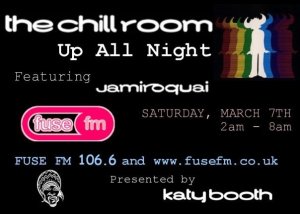
Quite fitting really as Jamiroquai had been one of my favourite bands for a while. I have collected a lot of their memorabilla over the years. (Surely every fan must have a Jami’ hat? Maybe that’s just me then…) Throughout all the bands’ various line-ups I have loved their funky acid-jazz vibes. This is not a totally fresh sound though, you just have to listen to Dexter Wensell or Skyy to hear where lead-singer Jay Kay has got his inspiration from, but it does make Jamiroquai veer outside of the mainstream. As a result, they don’t get as much radio airplay as they probably deserve. This is one of the reasons why I like to include their music in my radio shows.
I had been involved with the University of Manchester’s student radio station Fuse FM for about a year before that fateful night when the bug bit. Initially as part of the marketing and production teams before having my arm twisted (literally, if I remember rightly??) to get involved with on-air presentation. It was a big step for me; up until that point I had always been the shy type that liked music that no one seemed to know about. I wasn’t enjoying the banal nature my course at university and needed a creative outlet. The only problem being that I was so nervous; even during training while the station was off-air I couldn’t speak into the microphone was the red ‘mic live’ light lit up. I know you wont believe me if you listen to me now but, honestly, I would open my mouth and no sounds would come out! This did not bode well for live shows at all but the Fuse FM committee assured me I’d be fine. They were right and, show by show, I gained in confidence and being involved in radio was exactly what I needed to bring me out of my shell.
During the first broadcast period of our RSL I probably spent most time on the floor re-booting computers and plugging cables into sockets than I did on the micn but because my confidence had increased during my time with Fuse I was ready for new a challenge. This came in the form of an opportunity to present an overnight broadcast for from 2am to 8am before the station went off-air for that year. Up to that point the most radio I had done had been in 2 hour slots. Would I be able to find enough content to fill 6 hours straight? Then it occurred to me that Jamiroquai had, at that time, released 6 studio albums. All under an hour in length which meant that I could play one album per hour leaving enough time to do some speech links in between the songs – bingo! It would be a marathon Jamiroquai broadcast, the first of it’s kind and something that has never been done since.
“Just don’t expect anyone to listen” said my station manager. Fuse would promote this insomniac show the best they could but, with the FM transmitter only reaching to the outskirts of the university campus, it seemed realistic to expect the only people listening would be drunken students coming back from a wild night out. We did have an online stream of the station output so I had nothing to loose in contacting Jamiroquai fansites and forums to let them know what was happening; maybe someone would listen off the back of that? How wrong I was…
What followed that night was an amazing experience, during the show I received what seemed like a never ending stream of messages from all corners of the earth, from places like Argentina, Canada and Venezuela to name a few. I can even remember one particular message saying something like: “Hi Katy, just listening to your show on the beach here in Australia while we enjoy a barbie!” Wow, almost as hot as I was in our tiny little studio / sauna that was situated next to the Students’ Union’s broken boiler… radio isn’t as glamorous as you might think!
I thought all this contact must have been a wind-up, Fuse FM committees are notorious for those. (Just search on YouTube for some pranks we did during my year on the committee for proof of that!) This definitely wasn’t a prank though and for the first time I was now not just broadcasting to my friends or course mates, I was connecting with people who I didn’t know and they were interacting with me. I still keep in touch with some of the people that listened that night and they continue to support my radio work now. I had experienced the intimate beauty of what radio as a medium is all about, albeit on an extremely grand scale in student radio terms.
To this day my body clock hasn’t quite recovered, I’m still a creature of the night. I always jump at the chance to be involved in overnight programmes and continued to present and produce them for every Fuse FM broadcast until I left the station. I’ve also taken part in overnight election broadcasts for the station that I’m with now: North Manchester FM. I’ve never gone quite as global as I did the night of that Jamiroquai all-nighter, but that doesn’t matter. With radio being such a personal method of communication even if just one person listens and enjoys the show, that makes it all worthwhile.
Hopefully that gives you some idea of why radio is so important to me. It all came full circle this year in April when I was able to experience my first time seeing Jamiroquai perform live. This was a great spectacle and brought back lovely memories of the night when I got bitten by the radio bug – long may it continue! For that reason, Jamiroquai as a band will always have a special place in my heart and I love playing their music on my shows, the sentimental radio anorak that I am!

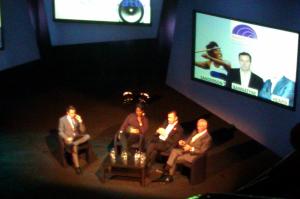
 To have a curator like John Peel guiding listeners through the hits (and misses) of new musical releases was fantastic… but it was also of its time. Peel’s legacy at the helm of the radio industry was in an era when much less choice existed. It was mentioned in the lecture that Peel would often play songs that the listener hated, if that happened nowadays then they can, almost too easily, switch over to another station to find something they do like.

 Katy Booth