What’s in a name?
It’s not every day you get mistaken for a glamour model, is it? Well, this happens quite often to me. Not due to the way I look, but because I share the same name as a page 3 model.
Dave Gorman made a TV programme called Who is Dave Gorman? where he travelled across the world to find people who shared the same name as him. I like the idea of that and social media makes it easy to find out who our namesakes are. I often get mistaken identity messages meant for other people with a similar name to me. From American footballers to former X Factor contestants or people thinking I’m related to the founder of the Salvation Army, the list of Katy Booths around the world couldn’t be more varied.
Katy (with a ‘y’) is what’s on my birth certificate but this was really a spelling mistake. My parents intended to call me Katie (with an ‘ie’) but during the chaos of giving birth three months too early the midwife didn’t check the spelling when writing my name on a wrist-tag, so spelt it the American way. Mum and dad saw this as fate and it’s stuck ever since.
Radio is probably the only industry where you say your name many times an hour. (I imagine that would get very annoying outside of a studio!) Mine is good for that because it’s quite short and snappy, although other spellings can be assumed by listeners too easily. I’m not suggesting you should do this, but if you type ‘Kate Booth’ into Google image search then you come across lots of images of a scantily dressed women who has appeared on the pages of lads’ mags.
Sorry to disappoint you – but that isn’t me! I know most people in broadcasting have second jobs to make a living but mine comes from being an English tutor, rather than a model. We look quite similar actually… from the neck upwards.
It got me thinking; could a mistaken identity like that have an impact on my journalism career, especially now employers use the internet to check the background of potential employees? Who knows, it might even help my career progression, but that would be for the wrong reasons. I would hope newsrooms have moved on since those of the 70s, as depicted in the film Anchorman. Gender equality in broadcasting is my ambition for the industry and why I’ve been part of the Sound Women movement since they launched at last year’s Radio Festival.
Ironically, image is becoming increasingly important in radio. I love listening to people on the wireless then searching for their profiles on station websites. Most don’t look like how I imagine them! There are not many pictures of me on the web. This is partly because I have the perfect face for radio but also because I wanted my voice to be the focal point of the work that I do. I realise it would be fickle to think like this with such a multi-platform media that we have available to us now. The ‘brand’ we project of ourselves across these platforms from the articles I write, to my image and the sound of my voice – it’s all important. If I become successful maybe the other Katy Booths out there will get messages from people thinking they’re me?
Just in case you’re not entirely sure which Katy Booth I am yet, here’s a ‘behind the scenes’ video of me presenting one of my radio shows…
Citizen journalism brings power to the people
The tools of a reporter are in our pockets most of the time – whether we realise it or not. No journalism training required; all that’s needed is an eye for a story and a mobile phone. In this digital age stories can be reported, recorded and uploaded to the web within a matter of seconds. The consequence is that amateur footage can look raw and wayward compared to that of a professional journalist – but maybe this fresh way of consuming news is what gives it the appeal.
Through the access that citizen journalists have achieve the media has access to places that would have otherwise been left untouched. However, this freedom is tainted by tragedy. At least 30 journalists and citizen journalists have been killed in Syria since the start of the uprising in the country in May 2011. In Syria’s case even the slightest amount of people power carries risk.
 Closer to home citizen journalism can be a tool used to tell the stories of the disadvantaged or those who feel ignored by other forms of media outlets. A large enough majority of people in Scotland felt cut off by the London 2012 Olympic and Paralympic games and they wanted to do something about it.
The Citizen Relay website tracked the torch’s journey across Scotland. Paul Bradshaw used his skills in data journalism to get the stories of the torch bearers heard. Using a data scraper he was able to obtain details of around 6,000 torch bearers and patterns began to emerge indicating that something wasn’t right. Looking meticulously at data in this way showed that six torch bearers shared the same ‘inspirational’ story. The data could then be tracked and it became apparent that, other than celebrities and sports people, a lot of the torch bearers were connected to corporate sponsors. More anomalies were uncovered once Paul used data verification to find out who was who.
Being at the heart of the news provides an excellent opportunity for wider public awareness but the very nature of this form of journalism is unregulated so it has the possibly to contain a reporter’s subjective view. I’m not sure this matters though, as long as the audience is clear where the citizen journalists’ work has come from or the motives behind it. This is especially true if this type of news is consumed alongside ‘traditional media’ – otherwise it’s propaganda. Key journalistic skills of accuracy and clarity apply for this type of media to be considered trustworthy by those who consume it.
Citizen journalism can create a voice for communities who would find it hard to attract the attention of the media, by creating their own outlets. Community radio is thriving with radio stations sharing the airwaves alongside BBC and commercial stations. Radio Regen, based in Manchester, is a community media association that offers training and education to give people their first foothold in radio. Also, The Institute of Community Reporters has been set up by People’s Voice Media, who are based in Salford. They offer their own multi-platform tailored training and web space for their reporters to see their work published by opening the channels of communication through social media.
A range of choices which embrace technological environments adds even more colour to our media landscape. The rise of citizen journalism means that the voice of the people is louder than ever before.
This article first appeared on the UK Journalism Review website.
Back to school and into virtual reality
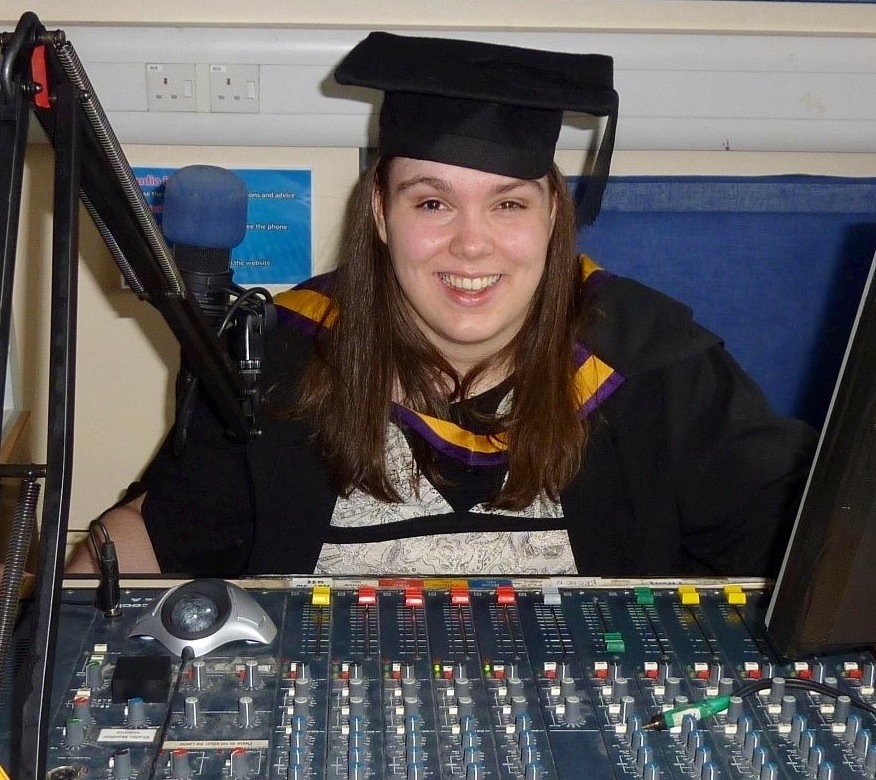 “Never again!!” I screamed as I threw my cap up in the air when I graduated with my bachelors degree in 2010. I loved the university experience – it was where I got my first taste of radio. Although, having studied an academic subject, I found it difficult to relate the theories I was learning to real life situations. Never say never though; after all, my high school motto was “Learning for Life”. I’ve found that to be true, especially now I’m a student again, this time studying for a masters degree.
After graduating first time around I worked for two years in the media industry. It was a big decision for me to go back to studying again; revising and completing assignments. I’ve took to it like a duck to water though – literally, considering all the rain we’ve had in North-West recently! I’m now at the University of Central Lancashire (UCLan) training to become a broadcast journalist. What’s great about the course is that it’s practical, so we learn by doing the work ourselves… Have camera and radio OB kit will travel!
Digital journalism is a key area that’s being used prevalently by news outlets. It’s not completely new to me; I’ve been using social media to enhance the content of my radio shows for years. I’ll always try out interesting new platforms but the three I use frequently are probably the most common: Facebook, Twitter and this blog.
 When I first looked into becoming a journalist, I was told that it would be a good idea to have an online presence, which is why I started blogging. This will still be my personal blog, written in an narrative style rather than using journalistic convention. It’s a way to record my thoughts and maybe even write something that you’ll find interesting. Not much will change here; I aim to update it at least once a month by publishing a new post.
Then there’s my journalism blog, about the ‘beat’ that I’ve been assigned on science and technology. Rather than personal thoughts, I post there weekly about that area of news. I’m now also one of the contributors on the UK Journalism Review website, where I comment on industry specific news. There’s exciting times ahead, all of which involve lots of writing – especially blogging. The letters are already starting to wear off my keyboard. I will judge how successful this year has been by how visible they are at the end!
Apple’s iPhone 5 is bigger but is it better?

Over two million people pre-ordered the new iPhone 5 within 24 hours of its release so they could get their hands on the latest gadget. This addition to the iPhone family coincided nicely with my new science and technology blog, so I went along to the Apple Store on the day of the launch to see if the hype was justified.

This photograph shows what it was like at the Apple Store in Manchester’s Trafford Centre at around 6pm – what I thought would have been a relatively quiet time. The store was so busy that barriers had to be put up so that potential customers could queue to try the device for themselves.
What’s new? [Features reviewed hands on in store and with the Tech Radar and T3 websites used as sources.]
– Size: At just 112 grams, the first thing I noticed about the iPhone 5 is how light it is; so much so that I thought I was holding a mock-up display version, rather than a fully working device. The size of the screen has also been increased to 4 inches, making this handset a longer 123.8mm compared to previous models.
– Camera: 8 megapixels worth of panoramic shots are a welcome addition to the iSight camera but this is only available when the phone is being held in portrait orientation. The front facing camera has been improved making it great for Skype and FaceTime calls. Although, at just 1.2 megapixels it would not be my stills camera of choice.
 – Maps: Google Maps has been replaced for Apple’s own offering in partnership with SatNav giants TomTom. This means that Street View has gone in favour of a 3D flyover mode, which is reported to be good for tourist areas but less once you start exploring residential areas. Voice navigation is also possible and now Siri can guide you through the streets.
– Passbook: Apple’s version for a virtual wallet for things like tickets, loyalty cards and boarding cards that usually take up room in your pocket. Payments can’t be made but it will potentially keep everything in one place and close to hand. A nice idea, it’s a shame no UK businesses have signed up.
– 4G: Installed on the phone but not available in the UK yet. Moving along…
– EarPods: A quirkier change rather than an update is the iPhone’s new earphones. EarPods have a bud shape, designed to fit snug in the ear canal. The sound quality is said to be superior compared to the iconic white earphones supplied with previous iPhone / iPod generations.
iPhone 5 more of an incremental update rather than a new revolutionary device. There’s not much difference from the iPhone 4S model, especially if the iOS 6 software update is installed where the new maps and Passbook capabilities will be available.
Apple have been consistently releasing new products in the autumn for some years now. With this comes eager anticipation but it can also be a let down if products don’t meet customers’ expectations. Last year’s iPad release was labelled as “The New iPad”, even though it is a third generation model. With such features as a retina display and an improved 5-megapixel camera it’s actually not all that different from the iPad 2. This is possibly why the ‘new’ version didn’t earn the label of ‘iPad 3′. Mark Pattison’s predictions before the new iPad’s release became a self-fulfilling prophecy:
iPad 3 is going to look uncannily iPad-like, and the computer giant’s constant game of conspiracy with consumers, has created something of a Gruffalo effect.
History repeats itself with iPhone 5 only having minor tweaks to their 4S model. Nobody believed the boy who cried wolf after a while and if Apple keep delivering false hope instead of fresh ideas the excitement that surrounds their products may wear off sooner rather than later.
This post first appeared over on my science and technology journalism blog.
I Started a Joke
One of my earliest memories of radio is listening to presenters playing pranks. Many a time I’ve been enthralled listening to one of Steve Penk’s wind-ups or Tiny Tim’s latest adventure on Justin Moorhouse’s show. I’ve always been a practical joker, so when I was let lose to broadcast on radio myself I knew that it was going to lead to pranks before too long.
I started on Fuse FM, presenting and producing my chillout show but, as you can imagine, it is not the most conductive environment to play a prank! All this changed when I took up my committee position and helped run the station. The broadcasting code stipulates that student radio stations must not play prank calls on the public… but we could get away with pranking other committee members (with their consent to broadcast it afterwards, of course.) I never received one of these calls unfortunately though. This was probably because I presented a Sunday morning show and, quite literally, no one could get up early enough to catch me!
The Radio Super Show was well known for the practical jokes they’d play around the station; it was a popular feature and compelling to listen to. Each week they’d target a show and try to persuade the presenter play a video that, unbeknownst to them, had a secret message hidden in it from the fader we hooked up to the computer for YouTube audio. This served as a great lesson actually, because presenters would learn the hard way that you must always PFL (pre-fade listen) unknown content before broadcasting it on-air… I fell for this myself when I took my eye off the ball while co-hosting a topical debate show and ended up playing the Mr Blobby song to the students of Manchester – who loved it!
Probably the most important rule for a prankster is to NEVER prank a station technician. Instead, it’s a much better strategy to have them on your side. This was essential for one of the bigger pranks that the Fuse committee played. The studios had just been fitted with a talk-back system, which meant that producers or newsreaders could sit in separate studios but still communicate with each other through their headphones. This was being trialled at the time, so we hadn’t told presenters about the new development. We couldn’t turn such a golden opportunity for mischief down. The webcams in the studios caught it all, I’m sure Orson Welles would have been proud of us. Here’s what happened next…
I haven’t played a prank since I graduated from student radio, I like to think it’s because I’ve matured like a fine wine now. The pranks that get played on me are also not as frequent but I still like to keep alert, just in case. Sometimes I do get caught out and it’s best that I don’t lead any type of Guess the Year features on Pure 107.8 FM any more because the team always find some way of getting the answer out of me! While over at North Manchester FM I can never be too sure if it’s a listener who has rang in or if it’s one of the other presenters disguising their voice outside in the office! They like to keep me on my toes. Maybe I’ll get them back one day, for old time’s sake…
Whether I started the joke or the joke is on me, it doesn’t really matter as long as everyone involved can see the funny side and laugh about it. I always say; if you can’t take it yourself then don’t dish it out, so I don’t mind (and secretly quite enjoy it) when I have a practical joke played on me. No one can see me blushing on radio anyway.
Remembering Amy Winehouse
It’s hard to believe that it has been year today since we lost the fabulously talented Amy Winehouse. I remember the moment well; there was a lot of speculation of her death ruminating around Twitter. Hoaxes on social media websites are not unheard of and, as I couldn’t find any viable source confirming her death, I hoped this would be the case. Then I heard the announcement on the radio – Amy Winehouse had died aged 27 at her home in Camden Square, London.
Due to the very intense lifestyle that Amy had lived, the news wasn’t entirely shocking but to lose her at such a young age, in the prime of her life and career, was saddening and such a loss to music.
I had been quite a late follower of Amy’s. Being aware of the buzz that surrounded her, but the music never really registered on my radar. That was until 2008, when I saw her performance of Love is a Loosing Game at the Brit Awards:-
From that moment, I was hooked. It was refreshing to hear an artist subvert the current chart conventions and hear soulful jazz inspired songs hitting the top spot. I instantly wanted to know more and began delving deeper by exploring her albums. What I liked about Amy was her retro vibe mixed with a sharp observational tenacity. You only have to be out at the weekend in a city centre to see life imitating the art as the lyrics from her song F’ Me Pumps unfold in front of you. She wrote lyrics from the heart but kept them current, combining this with musical production and her appearance that had a nice vintage twist, something reminiscent of The Shirelles, Martha and the Vandellas or The Marvelettes from years gone by.
In this superficial world that we live in, plagued by stories of scandal and celebrity, it’s almost too easy to take Amy Winehouse by face value. Rather than the headlines and hearsay that surrounded her career, let’s remember her for the music. The cannon of work that she has left behind is small but impressive. By those high standards, it is a shame that we will never know just how high her star may have risen to had she have lived longer. Amy Winehouse may be gone but her legacy will live on in her music and the new artists that she will continue to inspire for many years to come.
Making Mental Health Positive
 I find one of the things I enjoy most about radio is the opportunities it gives me to meet many interesting and inspirational people. Dawn Perry would be included way up at the top of this list; we first got in touch after she listened to my shows on North Manchester FM and contacted me about promoting her Facebook page: Making Mental Health Positive.
The campaign is about eliminating discrimination and the societal stigma that surrounds mental health issues, providing a platform to encourage self-help through positive peer-to-peer discussion. It has been uplifting to see the page progress from its formation into a thriving social media community, with well over 1,700 members based all over the world and growing. Health and wellbeing issues have a strong community connection because it is something that is universal and could potentially affect anyone.
My background working in the area of mental health spans back quite a few years to when I worked for the charity Anxiety UK as their media liaison officer. I started at around about the same time that I became involved in student radio. The combination of the two sparked my interest in music therapy, especially to aid relaxation. Over the years ‘Chillout’ is a musical genre that I have become synonymous with, rolling out the format I developed to radio stations across Greater Manchester.
Working for Anxiety UK taught me about meditation, mindfulness and self-hypnosis techniques that I have since incorporated into my lifestyle. My work here let me explore these interests deeper as well as helping others and promoting the many case studies of recovery that were used in the media. Years later, when Dawn approached me with her Making Mental Health Positive campaign we already had common ground as Dawn had been a member of Anxiety UK on their mentor programme.
It’s been a privilege to be involved with the campaign; to watch it progress and see the positive affect that it has on members. I’m glad that I can use my broadcasting experience to give the campaign a voice and spread the word about the good it does for the local community and beyond. Now not only a virtual social media page, the campaign has a strong presence within the North-West, partnered with The Lowry in Salford Quays. Meet and create groups are being set up, using the arts as a stimulus to bring people together and creatively helping end mental health discrimination. The first meeting will be delivered by Stich Art textile artist Joanne Walker on Sunday the 22nd of July. The August workshop will focus on photography and September’s will use the art of drama.
To hear my report from a recent campaign strategy meeting CLICK HERE.

The team hard at work(!) in last month’s strategy meeting.
Around the bend!
The essential guide for anyone learning to drive…
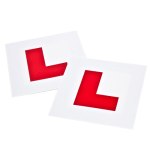 Highway Code from back to front, not to mention the countless hours of relentless private practice that, yet your theory and practical test revision is still driving you around the bend! Don’t worry, all the help you need to pass your driving test is right here and the best part is, you don’t even need to start the engine!
Now the academic year is drawing to a close I’ve noticed a lot of people making the great decision to learn how to drive. I thought it would be useful for me to post this article to my blog which I originally wrote for my college magazine, just after I had passed the test myself, almost six years ago. Some parts of the test have changed slightly since I became a qualified driver but I’ve researched this in order to keep as up-to-date as possible. If you are currently learning to drive, or just want to brush up on some facts, then I hope this article can be of some help to you and that driving gives you as much enjoyment as it does me.
The fact is that everyone you see behind the wheel of car that doesn’t have L Plates attached must have passed their driving test – otherwise it’s a blatant offence. The only difference will be if someone passed the British driving test before the 1st of July 1996 they would not have taken a theory and hazard perception test first.
If you thought that all you had to do to get a valid UK driving licence was to drive a car around for 40 minutes then you’re wrong. Learner drivers now also take 50 Who Wants to be a Millionaire style questions, which could range from what to do first at the scene of an accident to what to do when there is fog on the roads. Then you have to watch 14 clips of road hazards developing. This isn’t time to put your feet up; you now need to be constantly paying attention. It probably feels like a lot of extra pressure, but these additions to the driving test will make you a safer driver in the long run. Think about it – if you didn’t take this test then how would you know how fast your reaction speed is? This could greatly reduce the risk of involving you, or anyone else, in an accident.
The Theory Test
There’s no need to worry about taking the theory test; now more people are learning to drive now than ever before, so you can choose whatever method of revision you want. Either CDs or the ‘back to school’ version of books, the choice is yours. It really isn’t as bad as it seems once you get started… honest! Don’t let the prospect of taking the test get you down because it’s nothing like the exams you will remember when sitting in an exam hall. You have questions with multiple-choice answers – you don’t even need a pen in your hand! The test is taken via touch screens in test centres all across the country, proving that this new section of the test really does belong in the twenty first century.
Hazard Perception
Hazard perception follows directly after the theory test, you will see 14 clips that have been specially recorded and contain examples of all common types of hazards. This could be anything that can potentially happen in real life situations, from a cyclist cutting in front of you to a lorry parked on a bend. There are 5 points available on each clip and the earlier that you spot a potential hazard the more points you will be awarded. The computer records your responses when you click with the mouse as soon as you spot one. Don’t under-estimate the hazard perception part of the test; it’s a lot harder than it sounds but with some practice from the Internet or DVDs you should be fine.
Practical
We’ve got the theory side sorted, now lets think about the practical side of things. Once you’ve passed your theory and hazard perception you then have a maximum of two years to pass your practical test. Make sure you use the time wisely with your instructor, private practice sessions in your own time do help a lot too. Your instructor will tell you when you should to be entered for a practical exam. You then take the test at your local test centre in either your instructor’s car or one of your own choice. Just make sure that it’s up to MOT standard first, otherwise it won’t be eligible!
The duration of the test is approximately 40 minutes and, after a quick eyesight check, there are two ‘Show me’, ‘Tell me’ vehicle safety questions the examiner will ask you before you switch on the ignition. This gives you the chance to display how a section of the car works, which could mean checking the oil level, if the brake lights work, and so on. If you answer one or both of these questions wrong it will result in either one or two minor faults being recorded.
During the test you will encounter some hazards along a pre-planned route – just like in real life. You will have to complete manoeuvres that you have been learning in lessons as well. These manoeuvres will consist of any two of the following:
- Three-point-turn,
- Parallel parking,
- Reversing around a corner,
- Reversing into a parking bay (if your test centre has a car-park).
You may also have to do an emergency stop, but only if you are in an appropriate location to do so. The examiner will tell you this beforehand.
Don’t panic! You’ve been learning all of this with your instructor during lessons, so you will know what to expect when the time comes. All that’s left for me to say now is to wish you the very best of luck for your driving test but, more importantly, in all your future driving – after you rip up those L Plates!
Don’t Forget to Remember Disco
Great music, mirrorballs and dancing around handbags all help to define the disco era. The music has been brought into the limelight recently with a lot of prevalence due to the untimely passing of two stars of the genre; Donna Summer and Robin Gibb. Their music featured in the soundtrack of my formative years, which must be why I feel such a strong affinity with disco.
I may not have direct memories of this time period but I definitely enjoy hearing about it. My experiences of the music from the 70s have been formed subsequently, which started when I began to develop my own musical tastes… something in which the Bee Gees, inadvertently, feature quite heavily!
In the late 1990s I got my first Hi-Fi. No one calls sound systems that any more, but what made it extra special was that it was in the shape of a Coca-Cola can – I loved it! I’ll never forget the first albums that I bought on CD, which were: The Lighthouse Family’s Ocean Drive (I’ve always liked Easy Listening music you see) and a Top of the Pops compilation album because, like most young people do, I followed the charts like a hawk. Over the Christmas period of 1999 many artists of that time covered Bee Gees hits in aid of the charity called Live Challenge ‘99. Steps, Cleopatra (I can’t even type that without thinking “Comin’ at ‘cha!”) Boyzone, 911 and more 90s names released their versions of classic Bee Gees hits. I know that list doesn’t exactly set your heart racing now but back then it did for me. I wanted the tribute album and asked Santa Claus if he would bring it me for Christmas.
 Alas, I didn’t get it! There must have been a crossed line to the North Pole somewhere. What I did get was a Bee Gee’s album called One Night Only, recorded live at the MGM Grand in Las Vegas. I was not happy with this; any band my parents liked was not cool in my eleven-year-old eyes! So I stuck the album in a drawer, never to be spoken of again…
Many CDs were spun in my little Hi-Fi as the years passed and, as my musical exploration progressed, I started veer away from the constrictions of usual formulaic chart fodder. I became interested in many different genres, especially electronic based music, including bands like Daft Punk, Royksopp and Jamiroquai’s later work.
If you look hard enough for the six degrees of separation you’ll be able to see how all styles of music link together or how one genre has influenced another. With other songs though it’s not hard to hear the connection – take 2003’s Digital Love by Daft Punk as an example:
Now listen to George Duke’s I Love You More from 1979:
Spot the sample! A lot of the electronic music uses samples, especially the synthesizers and vocoders that are synonymous with disco music. So, even though disco is the genre that supplied a large amount of the soundtrack to the ‘70s, it is perhaps more influential nowadays than you may realise.
Music is eternal. I don’t think it matters that I wasn’t born during the 70s, when disco reached the height of popularity, in order to experience it. Taste doesn’t have to be constricted to what decade you grew up in – if it were then no one would ever listen to classical music! As there is such a massive range of music out there it would be narrow-minded to limit what you listen to by the charts, a certain genre or decade. I’m a huge advocate for encouraging musical exploration and with the internet, downloads and online streaming being so accessible there really is no reason not to delve that little bit deeper. (Get any How Deep is Your Love puns out of your system now, or forever hold your peace…)
Maybe an indication of how good songs are can be measured by how frequently they have been covered by other artists, which explains the ethos behind the Bee Gees tribute album that I yearned for in the late ‘90s… and I did get it eventually. The irony is that I don’t play it any more. I listen to the original versions of Bee Gees hits much more than any cover versions. The only reason that the One Night Only CD is in a drawer now is because I have converted the tracks into MP3s. I’ve played these songs even more often since hearing the news of the death of Robin Gibb. The longevity of music means that even though performers pass away their music can live on forever. I definitely will never forget to remember disco.
Stick a label on Charlene Soraia
 Wherever You Will Go, featured on the Twinings tea advert in the lead up to Christmas last year. I was so enamoured with this song that I had to delve deeper into her work and was thrilled to find an already impressive repertoire to her name.
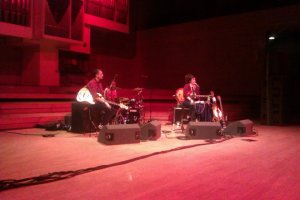
It’s interesting that Chalene’s biggest chart hit is purely piano led because she’s an incredibly gifted guitarist, self-taught and having played since the age of five. These influences feature prominently in her EPs and debut album Moonchild. At the age of 23 she is already a veteran of the touring circuit, regularly selling out the Night and Day in Manchester and countless other venues across the country. I was excited to finally get the chance to see her perform at the Royal Northern College of Music and her set didn’t disappoint.
To best describe the sound we have to talk about genre. I’ve encountered lots of musicians over the years but have never met one who liked being pigeon-holed by a label. This is probably because it becomes very constrictive; there’s a sneer if the artists venture beyond the genre that has been bestowed upon them by critics. Music shouldn’t be like that; it’s one of the most expressive and creative art forms so experimentation should be encouraged. Any good artist will want to enrich their own style by taking influences from many genres, therefore overlapping them all.

Here are some more labels for you: With similarities to artists like Katie Melua, Rumer and hitting the high notes as good as Minnie Ripperton, it made me wonder why the RNCM concert hall was only half full for the gig? Setting the ambience for the evening was the opening song When We Were Five, psychedelic in style. Charlene’s prowess with a guitar is almost mesmerising because it is so effortlessly natural to her. She switched to playing the mandolin for the mellow Midsummer Moon in June, baritone guitar for edgier Animal and back again throughout the set. All of which was interspersed with humorous anecdotes, making it a thoroughly enjoyable night.
With many strings to her bow (or should that be guitar?), Charlene Soraia has an impressive back catalogue, dabbling in various styles, that keeps on growing. If you’ve only heard The Calling’s cover song then her musical cannon is definitely worth exploring further. Especially if you like her style of music… whatever it is being labelled as at the moment. Regardless of what genre it is, the music sounds good. That’s the most important thing.
 Katy Booth