Category Archives: Radio
Journalism – a class of its own?
The essence of a journalist in a nutshell is to report news. Think of where news is generated; the possibilities are endless. News – whether it’s good or bad – can spring up from any situation. Granted, the chance of a newsworthy story increases for people in the public eye but a bulletin doesn’t have to resemble who’s on Jonathan Ross’ chat show sofa because it’s important that ordinary voices are heard and their stories are told too. In fact, those are often the most interesting.
In order to tell these stories appropriately, we need a diverse range of journalists who hail from a variety of backgrounds. This is so important for many reasons, including empathy with a interviewee, a range of contacts and knowing where to look – having a good nose for a story.
The problem with the industry at the moment is that the amount of diversity on offer is grately restricted and that’s because the most tried and tested way in is through the education system. It doesn’t matter about student loans because, at the end of the day, an undergraduate degree still costs £9,000 a year and for post-grads, the cost varies uni to uni, but it’ll be around the £5,000 mark for a year, without the same amount of student loan support available.
It’s a massive commitment to make when you decide you want to be a journo but it sorts out the wheat from the chaff because it’s a lot of time and money to spend pursuing a dream career. Which is why I would always recommend a budding journalist do what I did and get as much hands-on experience as possible before deciding which direction to take.
I stand by the comment I made on Twitter earlier this month…
https://twitter.com/katybooth/statuses/419845712386736128
Citizen journalism has it’s place but, if you want to make this a profession rather than a hobby, you need to be an accredited journalist before you can even think about applying for certain jobs. That’s for a reason because media law knowledge is vital in keeping any work accurate and trustworthy – two key qualities of a good journalist. You wouldn’t call someone a Doctor because they can open a bottle of Calpol and it shouldn’t be a parallel in journalism.
However, I appreciate the price tag of the education system can be very elitist. This is on top of needing to do a lot of unpaid work-experience to learn your craft, so you need to be able to support yourself somehow. As well as knowing how to drive and having your own car available, which is all very desirable, on top of enthusiasm and dedication to the craft.
I’m not saying it’s right or wrong – it’s just how the industry is. In order to become a journalist, education and subject knowledge is important because you need to be able to write well. Even if you’re a broadcast journalist, phonetic spellings akin to that of text talk belong in pronunciation brackets, not your script. You will also have to write web stories online increasingly as the digital world around us continues to evolve too. That’s all on top of probably the most essential skill – you need to be a good communicator.
There is a light at the end of this academic tunnel though and on-the-job training seems to be on the rise. As I’ve written in previous blog posts, I wouldn’t change my journalism training at UCLan for the world; I learnt so much there, made great friends and found myself as a person. Although, I’m like the idea of work while you learn schemes increasing because they aim to attract a diverse range of people to the journalism profession vocationally and that therefore allows more stories to be heard.
The BBC run the Journalism Trainee Scheme and ITV have announced their Break into News initiative. Student, community and hospital radio also rightly deserve their place as excellent training grounds and I’m one of many journalists who cut their teeth that way. The Journalism Diversity Fund is also available to help with fees for those who want to access the academic route.
Let’s focus on attracting diverse journalists into the profession with a wide range of life experiences that reflect the stories we want to tell because the audience want to hear them – in an engaging and trustworthy way. That’s how we become top of the class.
Radio’s big sex scandal!
If you’re reading this for a kiss and tell exposé then – I’m sorry – you won’t find any of that here! I wanted to give my reaction to the gender split that we have in radio.
Do a quick search on Google and you will see this definition of feminism, in a nutshell:
fem·i·nism
The advocacy of women’s rights on the grounds of political, social, and economic equality to men.
When I was reporting for BBC Radio Manchester about a topic on feminism, not everyone I asked on the street thought of a feminist in those terms. This snippet from my package also includes Richard Pankhirst speaking about his Suffragette mother, Sylvia:
The feminist movement has evolved a long way over the years, or has it? Not in the radio industry…
This surprises some people but wanting gender equality does not necessarily mean you have to be a woman to be a feminist – men can be feminists too. In fact, the Director General of the BBC, Tony Hall, seems to be one. Speaking in August, Mr Hall said: “By the end of 2014 I would like to see half of our Local Radio stations with a woman presenting on the Breakfast shows.”
Think of the voices you hear on radio in general, how many of the presenters’ voices are female? Sound Woman is an organisation that promotes equality for women working in audio: their research found 1 in 5 voices on radio is female out of presenters that fly (or should that be drive the desk?) solo. Just 13% are heard on breakfast shows – this certainly does not suggest an equal split.
 Across BBC local radio this split is more even; 48 per cent of the people who are employed are female. However, this takes into account other roles like journalists. In my experience, this area seems to attract more women than men nowadays. On my broadcast journalism masters there was a ratio of 5 ladies to one man in our class. In terms of presenting, the BBC like to reflect their audience, so it would make sense to have more women on-air, not just on breakfast shows, but more shows all together.
Or is it really that important? I wouldn’t want to get a job purely because I am a woman or any other label, for that matter. In any industry, positive discrimination may tick boxes but you won’t find the best people for the job by narrowing searches down with criteria. However, many women are capable of presenting radio shows on their own but, as the research suggests, not many are doing.
What worries me about Tony Hall’s plans is that he doesn’t specify what role he would like woman to be heard in this overhaul of BBC local radio shows. If women will appear as a sidekick to a (perhaps already existing) male presenter on the station then there’s no point in adding her as a token gesture. All that will do is reinforce the subordinate nature of female stereotypes that have been around since the ideology of the nuclear family.
This year’s Radio Festival, has a female feel to the line-up, especially with stalwart hosts Mark Radcliffe and Stuart McConnie dropped in favour of Fi Glover and Jane Garvey. Charlotte Church will also be the first woman to deliver the festival’s annual John Peel Lecture. Women’s role in radio is the hot topic on people’s lips at the moment – but it’s the voices the listeners hear over the airwaves that really matter.
Results day – the end of academia and onto a new start
Today students across the country got their A Level results but it’s been 6 years since I opened my sealed envelope from Parrs Wood Sixth Form college in Didsbury. It meant I was off to study a combined studies degree of English Language, Linguistics and Film Studies at The University of Manchester. From that moment, my life’s direction had been decided… I just didn’t realise it back then.
I’m writing this to say whatever academic results you achieve, whether they’re good or not quite what you hoped, it should not stop you from achieving your dreams. My graduation was bittersweet; I was the first person in my family to go to university, so my parents were thrilled, but I wished I had done better. I was disappointed because I achieved excellent A Level and GCSEs results but didn’t feel I was leaving university with a grade that reflected my true ability.
 The reason I didn’t do as well as I hoped was actually because I was spending too much time in radio studios! Ironically, this would eventually work out to my advantage. I didn’t enjoy the subject I was studying and couldn’t see the point if it wasn’t going to correlate with my career ambitions of working in media.
A university tutor told me that I would never be able to go on to study a masters… how wrong she was! This comment initially put me off applying for postgraduate study at UCLan but course leader, Caroline Hawtin, saw I had potential with my range of experience. (Spending all that time in radio studios WAS worth it after all!) Hopefully, anyone who knows me will know I’m completely dedicated to my career and was delighted to be offered a place on the broadcast journalism MA.
I took a chance coming out of working in the media industry to go back into further study, but enrolling was one of the best decisions I have ever made! I achieved distinctions for all my TV and radio practical work and digital modules, with merits for everything else. This shows that anyone can do well when you get the opportunity to study subjects you enjoy. That’s what made the difference to me and I appreciated my time at UCLan all the more because of it.
I still look back at my undergraduate degree at Manchester with fondness though. Academically, the course wasn’t right for me but without being there I would never have been bitten by the radio bug, by getting involved with student radio. This therefore wouldn’t have led me to qualifying as an accredited broadcast journalist. Maybe things do happen for reason?
Academic results, whether they’re good or bad, are only black ink on white paper – they can’t convey the true colour of what someone is like. Ultimately, they can only take you so far; it’s what you do after you open the envelope that really counts…
Top of the Vox Pops
Definition: VOX POP (Vox Populi) –“Voice of the people”
A vox pop is an interview with members of the public; their answers about a particular topic are usually edited to give snippets in succession. I’ve learnt lots by doing this over the years, so thought I would share what works best for me…
- Ask open questions!!
If you only remember one thing from this post then let it be this: Asking open questions is the most important thing you more do when you vox pop. Here’s an example:
CLOSED QUESTION: Do you agree with XXX?
OPEN QUESTION: What’s your opinions on XXX?
Open questions elicit expansive answers from people. There’s nothing more boring to listen to than a series of yes and no answers – we’re not playing Take Your Pick!
- Use station branding wherever possible.
This is almost like a form of ID and people will be comfortable speaking to you if they are familiar with the station you are doing the vox pops for.
- Approach people within the station’s demographic or target audience.
…But make sure the selection of people you speak to are diverse enough to give a true wide reflection of society’s opinions on a given topic.
- Target areas with a high amount of footfall.
You will get your work done quicker if you does this; more people around means you’re more likely to get a response. However, avoid places where there is a lot of flyering because people will have become used to saying no in these areas.
- Keep off private property.
Some areas, like shopping centres and train stations, are privately owned and you will need permission to vox pop here.
- When speaking to members of the public, who may be in a rush, walk alongside them.
This way they won’t have to stop and take time out of their day to talk to you, so you’re more likely to get a response.
- If someone says no then leave them.
Do not harass or beg someone to speak to you – someone else will come along who will. The same applies if someone ignores you; they’re doing this on purpose.
- Press record BEFORE you ask the question.
That way their response will be genuine. People are naturally curious and will often ask what you are going to ask them before they agree to speak to you. Avoid doing this as it ruins spontaneity, if they are not happy with anything then you don’t have to broadcast it and can always delete it.
- Always wear earphones (or headphones) to monitor the sound.
You will pick up noises or interference through earphones that your ears would not. Earphones are usually better when vox popping, as they are more portable.
- Keep an eye on the level monitor.
That’s a better indication of volume than what you can hear.
- Always use a pop screen or windshield on the microphone.
Do this even when indoors as a force of habit. Plosive consonants – particularly P, T and K – can produce irritating popping sounds, so a foam layer on the microphone reduces that risk. On windy days even a windshield won’t save you. In this case you’ll have to be creative with scarfs, coats, gloves – anything that will deaden the sound of wind hitting the mic.
- Keep safe!
Last but certainly not least! When you are immersed in your work it can be easy to take your eye off the ball. The equipment you’re carrying automatically makes you a target of unwanted attention in public places, so keep alert and an awareness of your surroundings at all times.
Keeping it Real
 My radio placement was over the other side of MediaCity with the Real and Smooth network. For a radio fan like me this was a great to work in a news hub that served a network of three stations, Smooth Radio (national), Real Radio (North West) and Real XS (Manchester). As is the unpredictable nature of news, during my time on placement a lot stories that got massive national media coverage broke on our North West patch.
As you’ll know from my post about my placement with BBC North West Tonight, this is a reflection of the work I did on placement rather than a recount of the news – you can access that in many places on the web, I’ll link to the stories. In these posts, I want to offer a different perspective through my eyes as a reporter…
MICHAEL AND HILLARY BREWER SENTENCED FOR SEXUAL ABUSE AT CHEETHAM’S SCHOOL OF MUSIC
I got my first taste of a media frenzy outside court after the sentencing of Michael and Hillary Brewer, who were charged with sex offences, mostly occurring while he was a teacher at Cheetham’s School of Music in Manchester. This case had got attention because of of the victims, Frances Andrade, took her life during the trial. Atmosphere outside of court was tense as the media eagerly awaited the statement from the Crown Prosecution Service.
The cameras were in place well before but radio reporters have to think quickly to get in a good position when speakers come out so that they can be in range to get good quality audio on the microphones. I did well to get right at the front, which not only meant that Real Radio got good brand placement for the cameras but also that my hand was seen on all the TV news channels that day. I’m now in a strange situation where my purple coat is more famous than I am!
DOG ATTACK THAT KILLED JADE ANDERSON IN ATHERTON
 No matter how much training you have beforehand, nothing can prepare you emotionally for some of the stories that you will have to cover as a journalist. The day started out like any other, I was out vox popping a light story in the morning but then I got the call to go on to Atherton, near Wigan, to cover the story on Jade Anderson – a 14 year old girl who had been mauled to death by pitbull type dogs. Like the flick of a light switch, the tone of the work had changed and was now incredibly sombre.
When I got to the crime scene I had never heard a silence like it; despite there being so much activity from media attention to people coming to pay their respects – there was no noise to be heard on the estatem other than a lone dog barking in the distance. Very haunting.
STEPHEN SEDDON GIVEN A LIFE SENTENCE FOR MURDERING HIS PARENTS
I had been following the Stephen Seddon trial while working with BBC North West Tonight and was in court reporting on his sentencing. Sedddon was found guilty for murdering both his parents. The judge, Mr Justice Hemblem, said the motive was for their inheritance money. Seddon’s sentence also included attempting to murder his parents earlier in the year by driving them into a canal.
Courtrooms feel very theatrical, maybe I have been watching too many legal dramas, but the atmosphere really was intense. To look directly at a man who has been sentenced to life imprisonment from the press box is a rare opportunity to have. It’s dramatic enough hearing about such cases on the news, but to actually be there to hear him sent down in person is something else. I was absorbing the atmosphere of the court proceedings happening around me while scribbling down notes as fast as I could – no recording devices are allowed in court. However, the judge’s words were so powerful, alongside Seddon’s own outbursts and last pleas of innocence, that I can still remember much of what was said in there verbatim, even now.

I covered lots of stories during my time on placement with Real, from the abolition of Legal Aid in some situations to Stockport being voted the second happiest place to live in Britain. (Yes, really!!) By far those that I’ve mentioned in this post are the news stories that stick in my mind most potently though. It was a joy to work with the team whose bulletins I’ve listened to for many years on a network of stations that I am a fan of. Not only was that an amazing experience in itself but I learnt so much while I was there too and my copy writing skills are well up to broadcast standard. Hearing scripts I had written be read in bulletins was amazing – I loved working in such a buzzing newsroom! My placements have given me the taste of what working life will be like when I graduate from my masters and I take all those valuable experiences forward with me now I’m applying for freelance work.
2012 – A look back on my year…
As we begin a new year I’m looking back on what made 2012 so memorable for me. There have been far too many things to list in one post, so I’m going to do a Top of the Pops style look back on my top three milestones of last year. (If you want to read my blog’s annual report then Click Here.)
3) Chilled Pure on Pure 107.8 FM
 I was listening on the day that Pure 107.8 FM was launched across Stockport in 2005 but would have never imagined (bad choice of word!?) that my voice would be on its airwaves. Now I have my own slot on the radio station that broadcasts to my home town and it’s a dream come true for me. I’ve been involved with the station in many different ways over the past three years – from wearing the panda suit to the end of year parties – it’s been great!
To be given the chance to present the Chilled Pure slot on the station was a great honour for me, not only because I appear on the schedule alongside seasoned broadcasters, but also because I get to play the easy-listening music that I’m passionate about.
I loved broadcasting on Christmas Eve into Christmas day; it was the icing on the cake for me to be on “Santa Watch” across the Stockport sky last year. I look forward to presenting more Chilled Pure weeknights from midnight in 2013!
2) Making Mental Health Positive
 It might seem obvious but one of the best things about community radio is that it puts you in touch with some of the wonderful things that happen in your local area. Through my Chill Room show on North Manchester FM a listener, Dawn Perry, got in touch to tell me about her Making Mental Health Positive campaign and during 2012 I’ve enjoyed getting involved with this.
I’m the campaign’s media co-ordinator and part of the admin team that moderate the Facebook page, which acts as an online peer-to-peer support network. To see content featured on my radio shows have an impact in the community as well as a positive affect on people’s lives is wonderful. The campaign’s monthly meet and create events have been a success at The Lowry last year and these are continuing in 2013. With the campaign’s member count growing every day we go into the New Year outreaching to more people than ever.
1) Broadcast Journalism at the University of Central Lancashire (UCLan)
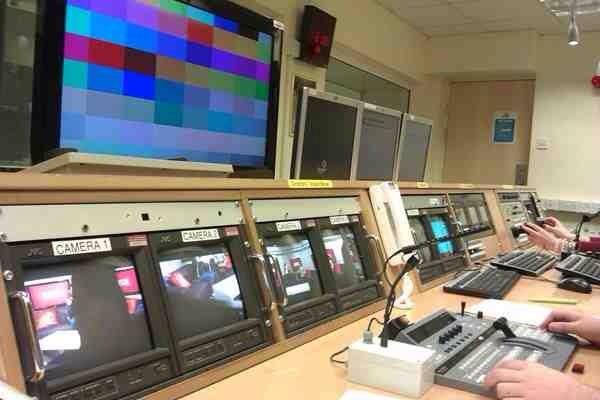
The turning point in my year came in September when I enrolled onto the Broadcast Journalism masters course at UCLan. Journalism had been a career path I’d considered for a long time but taking the plunge and starting the course was the best decision I made in 2012.
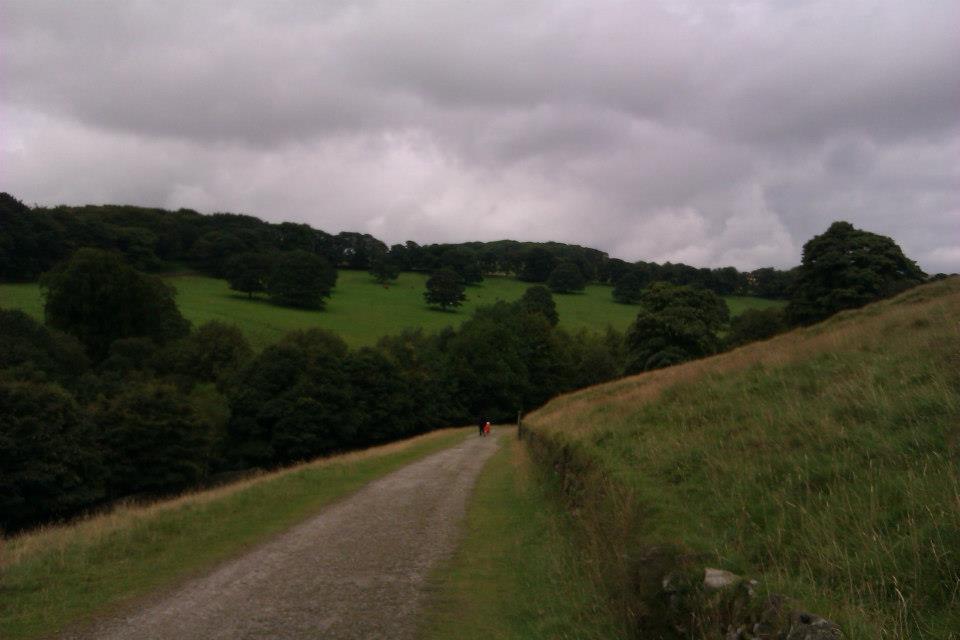
 My family’s roots are in Lancashire so I’ve enjoyed exploring Red Rose County and getting to know the people in the area, especially in a year as special as the Preston Guild. Being a broadcast journalist means that I’ve had the opportunity to meet people and try out things that I would’ve never had chance to otherwise. I love the spontaneity of it; no two days are ever the same. I’ve met the man who designed a Preston CityScape out of MDF wood, sparred in a Blackpool Boxing Gym as well as eaten a battered mince pie…. and that’s just some of the places where my reports took me last year!
When I write my review of what a year 2013 has been, I will have graduated. It’ll be interesting to see what I’ll be doing then and look back at how I got there. I’m dedicated to my career and determined to achieve my dream of becoming a broadcast journalist. I know this year’s going to be hard work but it will also be exciting. I hope you’ll stay with me and follow my blog throughout 2013.
To be continued…
Global vs GMG – not such a ‘Smooth’ takeover?
Global’s takeover of Guardian Media Group’s (GMG) stations will change the UK’s commercial radio landscape as we know it. Until a decision is made on March 27th about the future of the stations involved, speculation will continue as to what will happen next. Direct competition is between each network’s stations with similar demographics: (GMG stations listed first, with the genre of music they play in brackets.)
– Real vs Heart (Adult Contemporary)
If the takeover goes ahead consensus seems to be that Real stations will turn into Heart, which could then follow Capital’s example of syndicated shows across the network. This looks likely now Real’s own output is beginning to be syndicated, suggesting the transition to Heart would be smoother (pardon the pun!)
– Real XS vs XFM (Rock)
Real XS has had a tumultuous time of late – the re-brand from Rock Radio wasn’t liked by listeners. The station plays automated rock music other than at peak times (breakfast and drive), so a merger with XFM seems likely.
– Smooth vs Gold (Easy Listening)
Here’s where it gets interesting; it’s not as clear-cut what may happen to Smooth Radio. If this was a boxing match Smooth would be a heavyweight and Gold would be featherweight, they’re not as comparable as the genre of music they play might suggest.
A better way to compare stations is through RAJAR statistics, radio’s equivalent of TV ratings. A lot of spin can be put on these figures but I think ‘Listening Hours’, the total number of hours each station is listened to each week, gives the best indication of station size – especially as radio is all about listeners.

Data taken from last quarter’s RAJAR statistics. Total Listening Hours listed in hundreds.
You can see there are more Gold stations than Smooth but the areas that they cover are more concentrated, so their reach is smaller. Even though both groups of stations are available on digital multiplexes, analogue frequencies are still important. Smooth has the advantage of an FM presence here. Gold stations are only available on medium wave, which broadcasts at a lower audio quality.
These factors, along with higher listening hours, mean that Smooth has a stronger brand identity in the market than Gold, especially in the North-West. Smooth boasts a greater versatility in its playlist, by not just playing ‘Golden Oldies‘ but new releases too. There’s also some familiar presenters on Smooth’s schedule, including ex Radio 1 favourites.
London is a key market, this is where most RAJAR spin focuses on, and from these results it looks like Gold and Smooth are on an even keel here. However, unlike other regions, Bauer’s Magic is a big contender for both stations having consistently been top of the RAJAR battle. London needs to be a carefully considered region whatever fate for the stations is decided. Global’s own Classic FM is also a spoke in the wheel when it comes to targeting potential listeners to an easy listening station nationally as well, so that adds another dimension to the debate.
The over 40s demographic is an affluent and therefore attractive one for advertisers, which is why the Smooth vs Gold battle is so influential. Harry Hill might have the best method for deciding which is better? There’s only one way to find out…
The commercial radio ‘vampire’ takes a bite…
It seems that “vampire” has become a new buzz word; around this time last year at the Radio Festival, The Who’s Pete Townshend described iTunes as the ‘vampire’ of the music industry. Now journalism lecturer at Leeds Trinity, Richard Horsman, has labelled commercial radio news as the bloodsucker of its own industry:
UK commercial radio news has become a vampire industry, sucking in talent whilst putting next to nothing back.
The notion of local radio hardly exists any more. If you scan up the dial in a highly populated city you might think that because there’s so many stations around this must mean that lots of jobs are available for new blood. The reality is that an oligopoly has been created by networks owning a portfolio of stations, each targeting a specific listener demographic.
This is great for advertisers, who can approach a network and have commercials pigeon-holed on a station depending on the audience they want to reach. The outlook is not so good for journalists, especially those trying to enter the industry. Networking means fewer job opportunities because it saves money when news can be syndicated across many stations instead of having a different output at each one.
Like anything, cutting costs and corners can reduce quality. You’ll hear an example of this if you station hop in the evenings, at a non-peak time the same IRN news will be read by the same bulletin reader from the “Sky News Centre”. The only differences being that it might be jazzed up with a bed and top and tailed with a station jingle. This saves money, but it’s not locally targeted and not presented in-line with a station’s house-style.
 However, now the licence fee is frozen, the BBC has made cuts of their own too. The ‘Delivering Quality First’ (DQF) report may not have been as destructive to local radio as first thought, but a 10% reduction in staff can be quite substantial to smaller stations that are affected. If the BBC begin to syndicate more local programming across their stations then this fits in with what’s becoming something of an industry standard, but this sacrifices the very essence of what ‘local’ radio should be about.
I am trying to be realistic, rather than pessimistic, because this is the reality of what’s happening to the industry. The only people who have any real power to change this landscape are the listeners. As long as they’re listening, the RAJARs are up and the advertisers are kept happy because they know there are people out there hearing their commercials. While advertisers keep funding the stations nothing will change the cycle will continue. Obviously, advertising does not affect what happens at the BBC but RAJAR figures do matter.
When I initially wanted to turn my radio hobby into a career the response I often got was “Can’t you do something else?” I could – but my heart wouldn’t be in it. I’m well aware that I might not get my dream job or even any job in broadcast journalism at the end of my masters course at UCLan. Maybe I’m a gluten for punishment, but the reason I’m determined to be part of it is simply because I love the industry and, regardless of whether it’s commercial or the BBC, I want to make good radio. Vampire or not, I’ve been bitten by the radio bug and it’s not letting go.
Video killed the radio star
The Buggles’ 1979 release was the first music video to be played on MTV but does it also serve as a premonition? Having worked on both audio and visual mediums over the years I have seen convergence happening – and embraced it. Media consumers are bombarded with content that’s instantaneous and accessible at the touch of a button, so it makes sense for both sides of broadcasting to progress in parallel, especially in this digital age.
The fact that ITV’s head of commercial and online, Fru Hazlitt, spoke at this week’s radio festival about the future of digital radio shows that video hasn’t killed off radio. One broadcast medium can learn a lot from the other as well as being used as tools to enrich content on an additional platform.
Sources such as student media can be full of ideas, which can be trialled out in a relatively risk-free environment with no external constrictions to creativity. When I joined the committee as head of marketing at Fuse FM, I had just bought a video camera and was eager to put this to good use. Our studios were situated next to the Academy music venues and it became common to have the likes of Frank Turner, Kid British and Zero 7 popping in for interviews between sound checks. I was interested in promoting the station on as many platforms as possible to raise station awareness within the student community. By filming interviews as well as recording them for broadcast / podcasts we could tap into a whole new listenership that spanned beyond the university campus.
Hits to the videos we posted onto the YouTube channel soared (there’s over 15,000 views on the video I filmed of UFC fighters who we interviewed!) I didn’t want this output just to be a visual record of what went out on-air; my specialism was marketing and I wanted to tap into the thriving nature of social media to make unique content. Together with fellow presenter Max Behr, we devised a visual concept that would be a parody. Max had a well established nostalgia show on the station, playing music from the 1920s to the 1950s, so we decided to flip this on its head with a send-up video called ‘Wannabe White Boy Rapper’ that used humour as a way to make the video go viral. It certainly got people talking around campus and has been his party piece ever since!
What’s in a name?
It’s not every day you get mistaken for a glamour model, is it? Well, this happens quite often to me. Not due to the way I look, but because I share the same name as a page 3 model.
Dave Gorman made a TV programme called Who is Dave Gorman? where he travelled across the world to find people who shared the same name as him. I like the idea of that and social media makes it easy to find out who our namesakes are. I often get mistaken identity messages meant for other people with a similar name to me. From American footballers to former X Factor contestants or people thinking I’m related to the founder of the Salvation Army, the list of Katy Booths around the world couldn’t be more varied.
Katy (with a ‘y’) is what’s on my birth certificate but this was really a spelling mistake. My parents intended to call me Katie (with an ‘ie’) but during the chaos of giving birth three months too early the midwife didn’t check the spelling when writing my name on a wrist-tag, so spelt it the American way. Mum and dad saw this as fate and it’s stuck ever since.
Radio is probably the only industry where you say your name many times an hour. (I imagine that would get very annoying outside of a studio!) Mine is good for that because it’s quite short and snappy, although other spellings can be assumed by listeners too easily. I’m not suggesting you should do this, but if you type ‘Kate Booth’ into Google image search then you come across lots of images of a scantily dressed women who has appeared on the pages of lads’ mags.
Sorry to disappoint you – but that isn’t me! I know most people in broadcasting have second jobs to make a living but mine comes from being an English tutor, rather than a model. We look quite similar actually… from the neck upwards.
It got me thinking; could a mistaken identity like that have an impact on my journalism career, especially now employers use the internet to check the background of potential employees? Who knows, it might even help my career progression, but that would be for the wrong reasons. I would hope newsrooms have moved on since those of the 70s, as depicted in the film Anchorman. Gender equality in broadcasting is my ambition for the industry and why I’ve been part of the Sound Women movement since they launched at last year’s Radio Festival.
Ironically, image is becoming increasingly important in radio. I love listening to people on the wireless then searching for their profiles on station websites. Most don’t look like how I imagine them! There are not many pictures of me on the web. This is partly because I have the perfect face for radio but also because I wanted my voice to be the focal point of the work that I do. I realise it would be fickle to think like this with such a multi-platform media that we have available to us now. The ‘brand’ we project of ourselves across these platforms from the articles I write, to my image and the sound of my voice – it’s all important. If I become successful maybe the other Katy Booths out there will get messages from people thinking they’re me?
Just in case you’re not entirely sure which Katy Booth I am yet, here’s a ‘behind the scenes’ video of me presenting one of my radio shows…
 Katy Booth