Category Archives: Journalism
2012 – A look back on my year…
As we begin a new year I’m looking back on what made 2012 so memorable for me. There have been far too many things to list in one post, so I’m going to do a Top of the Pops style look back on my top three milestones of last year. (If you want to read my blog’s annual report then Click Here.)
3) Chilled Pure on Pure 107.8 FM
 I was listening on the day that Pure 107.8 FM was launched across Stockport in 2005 but would have never imagined (bad choice of word!?) that my voice would be on its airwaves. Now I have my own slot on the radio station that broadcasts to my home town and it’s a dream come true for me. I’ve been involved with the station in many different ways over the past three years – from wearing the panda suit to the end of year parties – it’s been great!
To be given the chance to present the Chilled Pure slot on the station was a great honour for me, not only because I appear on the schedule alongside seasoned broadcasters, but also because I get to play the easy-listening music that I’m passionate about.
I loved broadcasting on Christmas Eve into Christmas day; it was the icing on the cake for me to be on “Santa Watch” across the Stockport sky last year. I look forward to presenting more Chilled Pure weeknights from midnight in 2013!
2) Making Mental Health Positive
 It might seem obvious but one of the best things about community radio is that it puts you in touch with some of the wonderful things that happen in your local area. Through my Chill Room show on North Manchester FM a listener, Dawn Perry, got in touch to tell me about her Making Mental Health Positive campaign and during 2012 I’ve enjoyed getting involved with this.
I’m the campaign’s media co-ordinator and part of the admin team that moderate the Facebook page, which acts as an online peer-to-peer support network. To see content featured on my radio shows have an impact in the community as well as a positive affect on people’s lives is wonderful. The campaign’s monthly meet and create events have been a success at The Lowry last year and these are continuing in 2013. With the campaign’s member count growing every day we go into the New Year outreaching to more people than ever.
1) Broadcast Journalism at the University of Central Lancashire (UCLan)
The turning point in my year came in September when I enrolled onto the Broadcast Journalism masters course at UCLan. Journalism had been a career path I’d considered for a long time but taking the plunge and starting the course was the best decision I made in 2012.
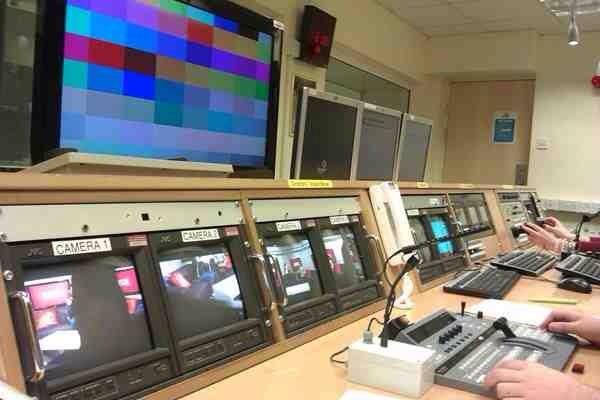 My family’s roots are in Lancashire so I’ve enjoyed exploring Red Rose County and getting to know the people in the area, especially in a year as special as the Preston Guild. Being a broadcast journalist means that I’ve had the opportunity to meet people and try out things that I would’ve never had chance to otherwise. I love the spontaneity of it; no two days are ever the same. I’ve met the man who designed a Preston CityScape out of MDF wood, sparred in a Blackpool Boxing Gym as well as eaten a battered mince pie…. and that’s just some of the places where my reports took me last year!
When I write my review of what a year 2013 has been, I will have graduated. It’ll be interesting to see what I’ll be doing then and look back at how I got there. I’m dedicated to my career and determined to achieve my dream of becoming a broadcast journalist. I know this year’s going to be hard work but it will also be exciting. I hope you’ll stay with me and follow my blog throughout 2013.
To be continued…
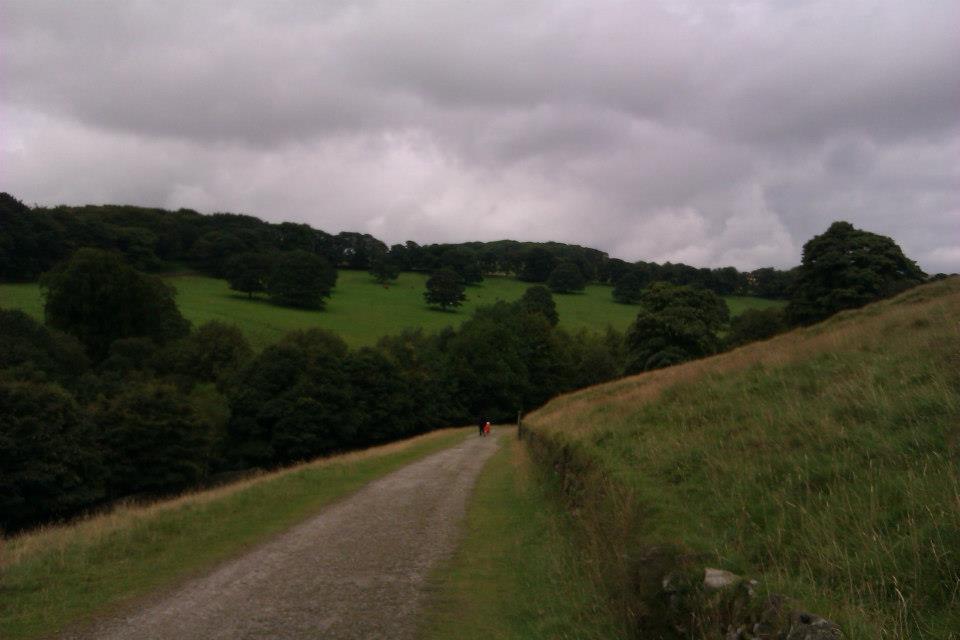
It’ll be alright on the night
Whether on radio or television, in broadcasting there’s a risk something might go wrong; it’s part of the excitement that keeps us on our toes. In every job I’ve had ‘health & safety’ is always first on the agenda and usually greeted with lots of eye rolling! Risk assessments can seem more of a burden than a necessity but last week I found first-hand just how important they are.
We’re familiar with blooper clips shows where a reporter is presenting a piece to camera and members of the public are larking around behind them. I’d been warned to have my wits about me in this situation, but it was still a shock to be attacked from a behind by gang of youths while filming in central Manchester.
As a journalist, presenting a piece to camera is a time when you are at your most vulnerable – I’d memorised my script and was concentrating on getting the delivery right. I was aware there was ‘action’ going on behind me because actuality makes a good background to a shot but when watching the footage back I could see how quickly the attack unfolded. A gang of about six teenagers had spotted our camera and started to make a beeline for me. Initially, it felt like I’d been punched in the head but it looks like I was hit with a rolled up magazine.
 Unfortunately, this type of occurrence is not uncommon; camera operators will have all sorts of horror stories about being attacked while doing their jobs. Big broadcast cameras take great pictures but are conspicuous and instantly make you a target by drawing attention to what you’re doing. This can be an advantage of course, people will approach to chat about what you’re filming but it’s important to be aware of the negative type of attention that can cause people to behave strangely or aggressively.
After the Leveson inquiry there seems to be a lack of respect for journalists somewhat but it’s important not to generalise everyone. I got into journalism to promote the good of society and expose the bad. Presenting to camera is a time a reporter needs to be natural rather than worrying it may provoke an assault.
What I love about broadcasting is meeting people and I have certainly met all kinds during my last few assignments(!) The majority of members of the public are lovely people and we mustn’t let the minority of attention-seeking yobs overshadow that. I have a bit of trepidation about filming my next report, I suppose the confidence has quite literally been knocked out of me. However, I know how important it is to get back on the horse and ride it. Or in my case – get out there and film it. Onwards and upwards!
“They who turn and run away live to write another day.”
Health and Safety advice from the Chartered Institute of Journalists.
The commercial radio ‘vampire’ takes a bite…
It seems that “vampire” has become a new buzz word; around this time last year at the Radio Festival, The Who’s Pete Townshend described iTunes as the ‘vampire’ of the music industry. Now journalism lecturer at Leeds Trinity, Richard Horsman, has labelled commercial radio news as the bloodsucker of its own industry:
UK commercial radio news has become a vampire industry, sucking in talent whilst putting next to nothing back.
The notion of local radio hardly exists any more. If you scan up the dial in a highly populated city you might think that because there’s so many stations around this must mean that lots of jobs are available for new blood. The reality is that an oligopoly has been created by networks owning a portfolio of stations, each targeting a specific listener demographic.
This is great for advertisers, who can approach a network and have commercials pigeon-holed on a station depending on the audience they want to reach. The outlook is not so good for journalists, especially those trying to enter the industry. Networking means fewer job opportunities because it saves money when news can be syndicated across many stations instead of having a different output at each one.
Like anything, cutting costs and corners can reduce quality. You’ll hear an example of this if you station hop in the evenings, at a non-peak time the same IRN news will be read by the same bulletin reader from the “Sky News Centre”. The only differences being that it might be jazzed up with a bed and top and tailed with a station jingle. This saves money, but it’s not locally targeted and not presented in-line with a station’s house-style.
 However, now the licence fee is frozen, the BBC has made cuts of their own too. The ‘Delivering Quality First’ (DQF) report may not have been as destructive to local radio as first thought, but a 10% reduction in staff can be quite substantial to smaller stations that are affected. If the BBC begin to syndicate more local programming across their stations then this fits in with what’s becoming something of an industry standard, but this sacrifices the very essence of what ‘local’ radio should be about.
I am trying to be realistic, rather than pessimistic, because this is the reality of what’s happening to the industry. The only people who have any real power to change this landscape are the listeners. As long as they’re listening, the RAJARs are up and the advertisers are kept happy because they know there are people out there hearing their commercials. While advertisers keep funding the stations nothing will change the cycle will continue. Obviously, advertising does not affect what happens at the BBC but RAJAR figures do matter.
When I initially wanted to turn my radio hobby into a career the response I often got was “Can’t you do something else?” I could – but my heart wouldn’t be in it. I’m well aware that I might not get my dream job or even any job in broadcast journalism at the end of my masters course at UCLan. Maybe I’m a gluten for punishment, but the reason I’m determined to be part of it is simply because I love the industry and, regardless of whether it’s commercial or the BBC, I want to make good radio. Vampire or not, I’ve been bitten by the radio bug and it’s not letting go.
BBC – British Broadcasting Crisis?
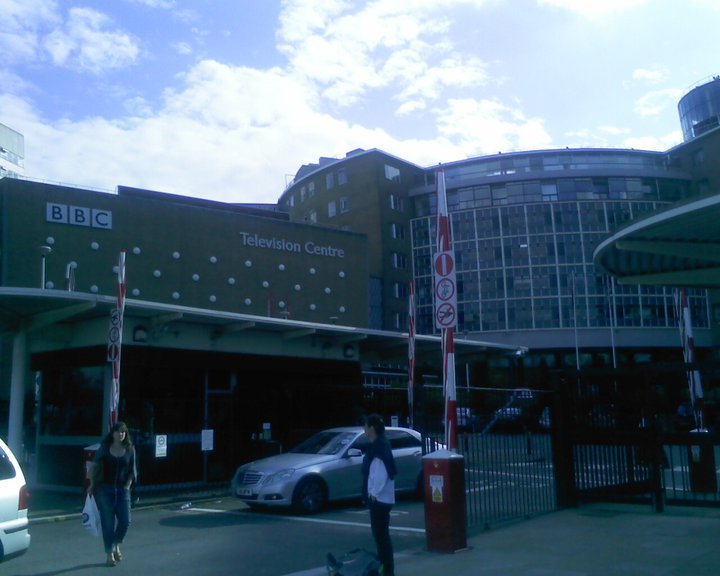 BBC Director General and ‘editor-in-chief’, George Entwistle resigned from his post following a string of mistakes during his time in positions of authority. Of all the news stories you would expect the BBC to break it would be one concerning a change at the top of its own corporation – but ITN got the scoop. The announcement came just seconds too late to make the BBC 9 0’clock news bulletin, which epitomises the corporation’s bad luck over recent weeks.
The decision came after the BBC themselves made headlines by not airing a Newsnight interview that revealed allegations into Jimmy Savile’s paedophile past as well as airing another Newsnight programme which wrongly accused former MP, Lord McAlpine, of child abuse in a North Wales care home. The freelancing fiasco about how presenters were paid indirectly through separate companies to avoid tax wouldn’t have helped matters either.
Entwistle had been in charge for just 54 days, making him the shortest director general in BBC history. His time at the top was short and sour, rather than sweet, after being made a scapegoat to take the blame for the mistakes of others. Of course, part of his responsibility was to oversee the corporation, but a consequence of a big corporate hierarchy like the BBC’s is that the people who made the crucial mistakes will escape punishment and carry on, if not at the BBC then at another media organisation. These flaws don’t even concern good journalism – it’s common sense. Programmes about child abuse should have alarm bells ringing to be referred for checks.
However, Entwistle’s name may not have been on the Director General’s door when the root of these problems occurred but he was high enough in other positions at the corporation to have done something about it. We don’t get second chances often in life but Entwistle did when he was promoted to the top spot. Part of his role was to deal with controversy when it occurs and it’s a paradox that John Humphreys’ interview with Entwistle on Radio 4’s Today programme on the morning of his resignation probably played a part in his decision to leave. Instead of sounding like a man of authority Entwistle came across bumbling about facts, not displaying qualities of a strong leader.
The BBC’s ability to examine and interrogate themselves must be commended; this is one of the reasons why the ‘crisis’ will be resolved when the news becomes chip paper. Critical times lie ahead for one of the world’s much-loved and trusted broadcasters. Former head of BBC Worldwide, Tim Davie, takes over as ‘acting Director General’ for now. He lacks a journalistic background but also lacks involvement in any of the scandals that contributed to his predecessor’s downfall. A series of unfortunate events led to Entwistle’s resignation but this was probably the right decision in order to sustain the public’s trust in the organisation that we fund through our licence fee.
VIEW A TIMELINE OF THE RISE AND FALL OF GEORGE ENTWISTLE AS BBC DIRECTOR GENERAL HERE
Citizen journalism brings power to the people
The tools of a reporter are in our pockets most of the time – whether we realise it or not. No journalism training required; all that’s needed is an eye for a story and a mobile phone. In this digital age stories can be reported, recorded and uploaded to the web within a matter of seconds. The consequence is that amateur footage can look raw and wayward compared to that of a professional journalist – but maybe this fresh way of consuming news is what gives it the appeal.
Through the access that citizen journalists have achieve the media has access to places that would have otherwise been left untouched. However, this freedom is tainted by tragedy. At least 30 journalists and citizen journalists have been killed in Syria since the start of the uprising in the country in May 2011. In Syria’s case even the slightest amount of people power carries risk.
 Closer to home citizen journalism can be a tool used to tell the stories of the disadvantaged or those who feel ignored by other forms of media outlets. A large enough majority of people in Scotland felt cut off by the London 2012 Olympic and Paralympic games and they wanted to do something about it.
The Citizen Relay website tracked the torch’s journey across Scotland. Paul Bradshaw used his skills in data journalism to get the stories of the torch bearers heard. Using a data scraper he was able to obtain details of around 6,000 torch bearers and patterns began to emerge indicating that something wasn’t right. Looking meticulously at data in this way showed that six torch bearers shared the same ‘inspirational’ story. The data could then be tracked and it became apparent that, other than celebrities and sports people, a lot of the torch bearers were connected to corporate sponsors. More anomalies were uncovered once Paul used data verification to find out who was who.
Being at the heart of the news provides an excellent opportunity for wider public awareness but the very nature of this form of journalism is unregulated so it has the possibly to contain a reporter’s subjective view. I’m not sure this matters though, as long as the audience is clear where the citizen journalists’ work has come from or the motives behind it. This is especially true if this type of news is consumed alongside ‘traditional media’ – otherwise it’s propaganda. Key journalistic skills of accuracy and clarity apply for this type of media to be considered trustworthy by those who consume it.
Citizen journalism can create a voice for communities who would find it hard to attract the attention of the media, by creating their own outlets. Community radio is thriving with radio stations sharing the airwaves alongside BBC and commercial stations. Radio Regen, based in Manchester, is a community media association that offers training and education to give people their first foothold in radio. Also, The Institute of Community Reporters has been set up by People’s Voice Media, who are based in Salford. They offer their own multi-platform tailored training and web space for their reporters to see their work published by opening the channels of communication through social media.
A range of choices which embrace technological environments adds even more colour to our media landscape. The rise of citizen journalism means that the voice of the people is louder than ever before.
This article first appeared on the UK Journalism Review website.
Back to school and into virtual reality
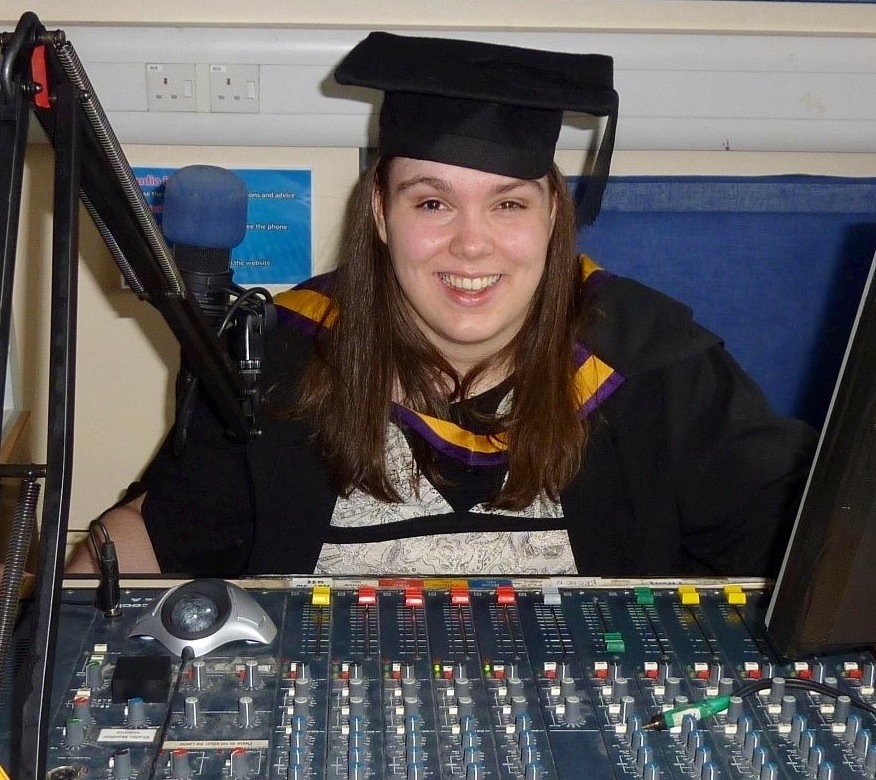 “Never again!!” I screamed as I threw my cap up in the air when I graduated with my bachelors degree in 2010. I loved the university experience – it was where I got my first taste of radio. Although, having studied an academic subject, I found it difficult to relate the theories I was learning to real life situations. Never say never though; after all, my high school motto was “Learning for Life”. I’ve found that to be true, especially now I’m a student again, this time studying for a masters degree.
After graduating first time around I worked for two years in the media industry. It was a big decision for me to go back to studying again; revising and completing assignments. I’ve took to it like a duck to water though – literally, considering all the rain we’ve had in North-West recently! I’m now at the University of Central Lancashire (UCLan) training to become a broadcast journalist. What’s great about the course is that it’s practical, so we learn by doing the work ourselves… Have camera and radio OB kit will travel!
Digital journalism is a key area that’s being used prevalently by news outlets. It’s not completely new to me; I’ve been using social media to enhance the content of my radio shows for years. I’ll always try out interesting new platforms but the three I use frequently are probably the most common: Facebook, Twitter and this blog.
 When I first looked into becoming a journalist, I was told that it would be a good idea to have an online presence, which is why I started blogging. This will still be my personal blog, written in an narrative style rather than using journalistic convention. It’s a way to record my thoughts and maybe even write something that you’ll find interesting. Not much will change here; I aim to update it at least once a month by publishing a new post.
Then there’s my journalism blog, about the ‘beat’ that I’ve been assigned on science and technology. Rather than personal thoughts, I post there weekly about that area of news. I’m now also one of the contributors on the UK Journalism Review website, where I comment on industry specific news. There’s exciting times ahead, all of which involve lots of writing – especially blogging. The letters are already starting to wear off my keyboard. I will judge how successful this year has been by how visible they are at the end!
Apple’s iPhone 5 is bigger but is it better?

Over two million people pre-ordered the new iPhone 5 within 24 hours of its release so they could get their hands on the latest gadget. This addition to the iPhone family coincided nicely with my new science and technology blog, so I went along to the Apple Store on the day of the launch to see if the hype was justified.

This photograph shows what it was like at the Apple Store in Manchester’s Trafford Centre at around 6pm – what I thought would have been a relatively quiet time. The store was so busy that barriers had to be put up so that potential customers could queue to try the device for themselves.
What’s new? [Features reviewed hands on in store and with the Tech Radar and T3 websites used as sources.]
– Size: At just 112 grams, the first thing I noticed about the iPhone 5 is how light it is; so much so that I thought I was holding a mock-up display version, rather than a fully working device. The size of the screen has also been increased to 4 inches, making this handset a longer 123.8mm compared to previous models.
– Camera: 8 megapixels worth of panoramic shots are a welcome addition to the iSight camera but this is only available when the phone is being held in portrait orientation. The front facing camera has been improved making it great for Skype and FaceTime calls. Although, at just 1.2 megapixels it would not be my stills camera of choice.
 – Maps: Google Maps has been replaced for Apple’s own offering in partnership with SatNav giants TomTom. This means that Street View has gone in favour of a 3D flyover mode, which is reported to be good for tourist areas but less once you start exploring residential areas. Voice navigation is also possible and now Siri can guide you through the streets.
– Passbook: Apple’s version for a virtual wallet for things like tickets, loyalty cards and boarding cards that usually take up room in your pocket. Payments can’t be made but it will potentially keep everything in one place and close to hand. A nice idea, it’s a shame no UK businesses have signed up.
– 4G: Installed on the phone but not available in the UK yet. Moving along…
– EarPods: A quirkier change rather than an update is the iPhone’s new earphones. EarPods have a bud shape, designed to fit snug in the ear canal. The sound quality is said to be superior compared to the iconic white earphones supplied with previous iPhone / iPod generations.
iPhone 5 more of an incremental update rather than a new revolutionary device. There’s not much difference from the iPhone 4S model, especially if the iOS 6 software update is installed where the new maps and Passbook capabilities will be available.
Apple have been consistently releasing new products in the autumn for some years now. With this comes eager anticipation but it can also be a let down if products don’t meet customers’ expectations. Last year’s iPad release was labelled as “The New iPad”, even though it is a third generation model. With such features as a retina display and an improved 5-megapixel camera it’s actually not all that different from the iPad 2. This is possibly why the ‘new’ version didn’t earn the label of ‘iPad 3′. Mark Pattison’s predictions before the new iPad’s release became a self-fulfilling prophecy:
iPad 3 is going to look uncannily iPad-like, and the computer giant’s constant game of conspiracy with consumers, has created something of a Gruffalo effect.
History repeats itself with iPhone 5 only having minor tweaks to their 4S model. Nobody believed the boy who cried wolf after a while and if Apple keep delivering false hope instead of fresh ideas the excitement that surrounds their products may wear off sooner rather than later.
This post first appeared over on my science and technology journalism blog.
 Katy Booth